A damning new report has exposed the staggering pace of Nigeria’s borrowing, revealing that the President Bola Tinubu administration has accumulated more debt in just 24 months than the nation incurred during its first 55 years of independence.
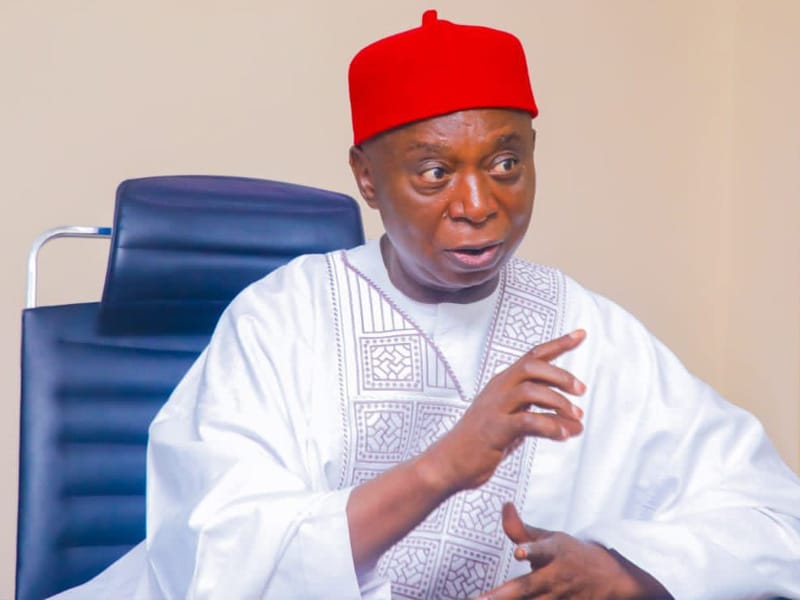
Dele Oye, Chairman of the Alliance for Economic Research and Ethics, raised the alarm over the country’s unprecedented fiscal trajectory.
According to data from the Debt Management Office, Nigeria’s total public debt reached N159.28 trillion as of April 2026, meaning every single Nigerian now effectively owes N670,000. Oye warned that without immediate fiscal discipline, the country’s public finances face long-term paralysis.
Oye contrasted Nigeria’s current fiscal crisis with its economic high point in 2006, when President Olusegun Obasanjo wiped out $30 billion in Paris Club debt, leaving the country briefly debt-free.
The trajectory since then highlights a rapid escalation. Nigeria accumulated N12.06 trillion in its first 55 years of independence up to 2015. During the subsequent Buhari era, debt exploded by 620 percent to N87.38 trillion, heavily fueled by Central Bank’s Ways and Means money printing. The Tinubu administration has since added an additional N65.9 trillion in just two years, which is more than five times the total debt accumulated in Nigeria’s first five decades of independence.
While government officials frequently point to Nigeria’s debt-to-GDP ratio of 35.5 percent, which sits comfortably below the International Monetary Fund’s 55 percent distress threshold and looks healthier than South Africa’s 78.8 percent or Kenya’s 65.6 percent, Oye warns that this is a dangerous distraction.
He cautioned that the number that actually matters is the debt service-to-revenue ratio, which measures how much of every Naira earned goes straight to paying creditors. Nigeria’s ratio stood at 116.8 percent in 2024, easing only slightly to 113 percent in the first quarter of 2025. In January 2025 alone, Central Bank data showed the Federal Government paying out N696.27 billion in debt service against total retained revenue of just N483.47 billion, representing a crushing 144 percent coverage ratio in a single month.
Despite the grim numbers, Oye insists Nigeria has the tools and talent to avert disaster, provided there is political will. He outlined five non-negotiable prescriptions to salvage the economy, starting with the digitization and broadening of tax collection to expand the revenue base. He also called for strict enforcement of the Fiscal Responsibility Act with criminal sanctions for violators, alongside an immediate restructuring of Eurobond maturities before the heavy redemption wall hits between 2027 and 2029. Furthermore, Oye advised channeling future oil windfalls into a constitutionally protected stabilization fund and decentralizing revenue generation by empowering states to create wealth rather than relying entirely on monthly federal allocations from Abuja. Newsscroll.