ADC presidential primary: Atiku wins in 8 states declared so far


Former Vice President, Alhaji Atiku Abubakar is leading other aspirants in the on-going presidential primary of the African Democratic Congress (ADC) as results from 8 states have shown.

The election is also being contested by a former Rivers State Governor, Rt. Hon. Rotimi Amaechi; and a renowned economist, Mohammed Hayatu-Deen.

Gombe, Abia, Ebonyi, Sokoto, Zamfara, Osun, Taraba and Yobe States’ results have been published and Atiku is maintaining a commanding lead so far.


Gombe State’s Returning Officer, Prof. David Agbu, said that Atiku polled 139,334 votes. Amaechi came in a distant second with 1,150 votes, while Hayatu-Deen secured 464 votes.


In Abia State, Atiku scored 25,153 votes against Amaechi’s 18,339 votes and Hayatu-Deen’s 3,264 votes while in Ebonyi State, the ADC National Vice Chairman (Diaspora), Fred Onwe, announced that  Atiku secured 15,300 votes, while Amaechi polled 2,200 votes and Hayatu-Deen managed 200 votes.


Atiku polled 68,823 votes in Sokoto State, leaving Amaechi with 292 votes and Hayatu-Deen with 319 votes while in Zamfara State, Atiku obtained 60,500 votes. Hayatu-Deen scored 436 votes, while Amaechi secured 191 votes.


Atiku won in Osun State with 12,321 votes, defeating Hayatu-Deen, who polled 4,000 votes, while Amaechi came third with 679 votes.


Also in Taraba State, the former VP polled 48,523 against Amaechi’s 25,150 votes, and Hayatu-Deen’s 8,369 votes and in  Yobe State, Atiku won with 44,841 votes, according to the Chairperson of the Electoral Committee, Hajiya Ma’am Kyari.


She said that Amaechi secured 300 votes, while Hayatu-Deen polled 365 votes.


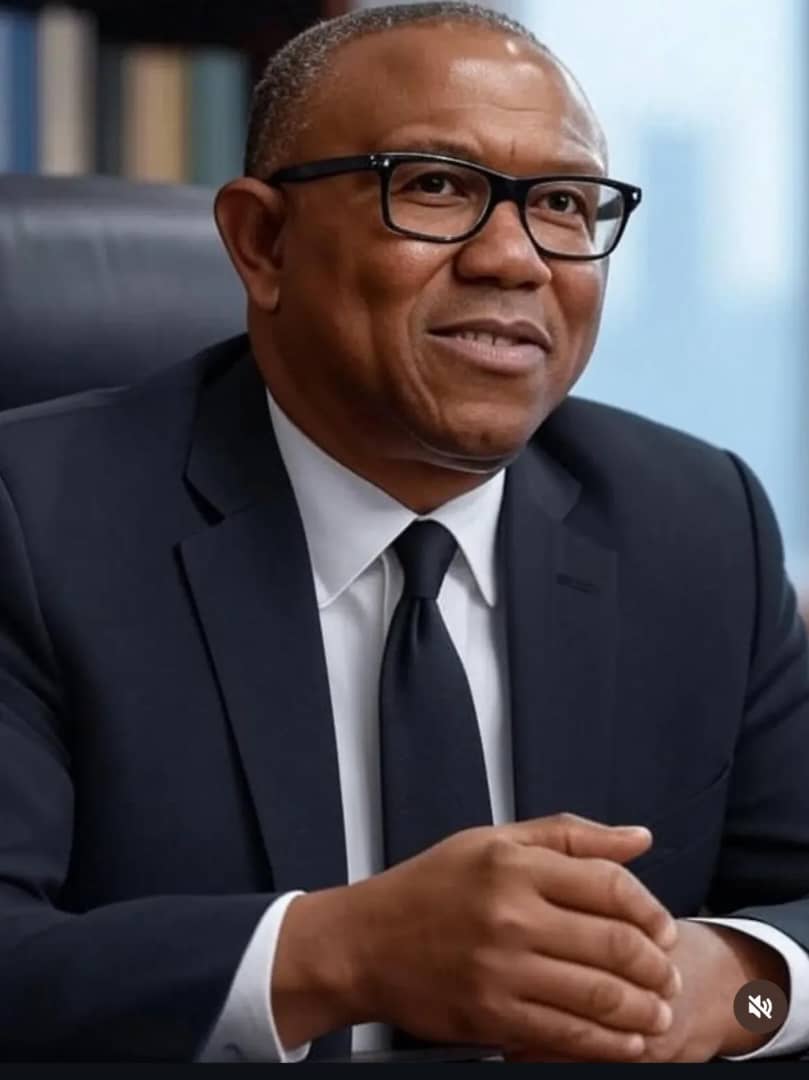
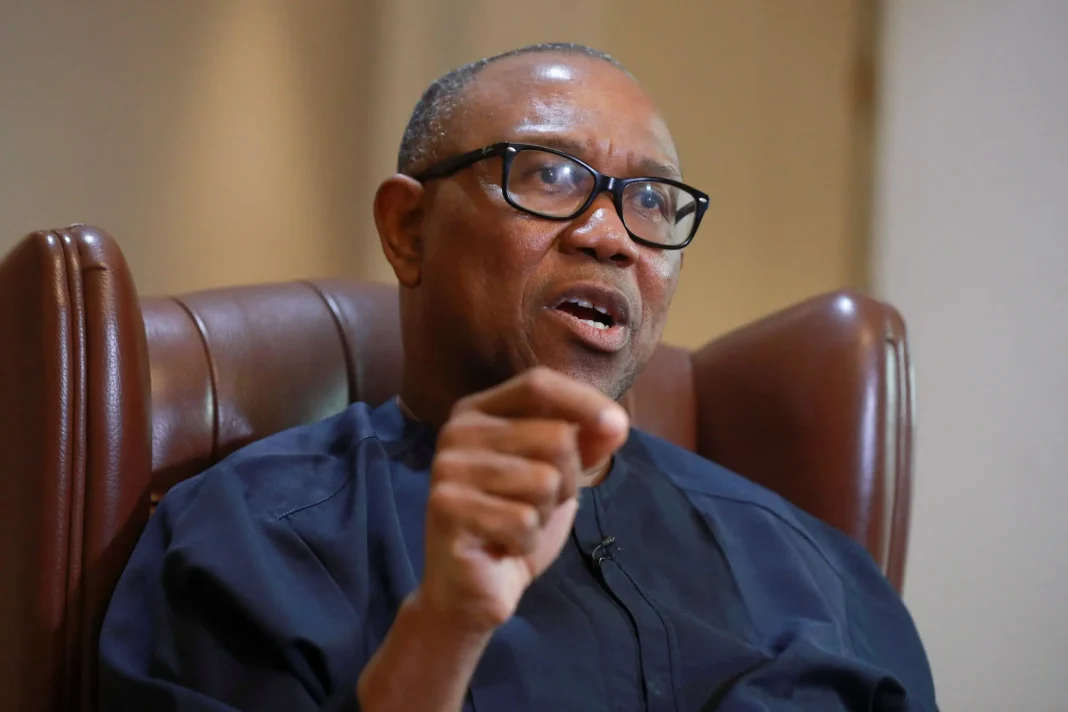
Why Peter Obi’s political fame is not an online fad -Media Office


The Media Office of Peter Obi said it has again noted the deliberate attempt to tag the meteoric political rise of our principal an online movement—often characterised by the highly vocal, youth-driven “Obidient” digital phenomenon.

In a statement in Abuja on Tuesday, the Office said “These bellyaching critics frequently dismissed it as a mere flash in the pan or an internet fad.


“But the Obi Media office is here to show them a deeper look at political and economic data on Obi revealing that this online trend is heavily anchored in tangible historic antecedents.

​“The digital enthusiasm is essentially a reaction to a proven track record in private corporate governance and public fiscal management which none of his opponents can display.


​In Corporate Governance and Financial Prudence


​Long before entering politics, Obi established a reputation in the private sector for asset management and corporate discipline.

  • ​The Fidelity Record: He remains notably recognised as the youngest individual to hold the position of Chairman at Fidelity Bank, Nigeria. His corporate career spanned executive roles across multiple financial and logistics firms.
  • ​The Transition to Public Policy: When his online supporters advocate for “cutting the cost of governance,” they are echoing his corporate philosophy. In office, he famously converted private-sector cost-minimisation strategies into state policy, dismantling bloated executive apparatuses.


In The Anambra State Metrics (2006–2014)


​The core data justifying the online momentum stems from his two tenures as Governor of Anambra State. His administration utilised the Anambra Integrated Development Strategy (ANIDS), mapping state development directly to Millennium Development Goals (MDGs).

​The table below breaks down the key performance indicators from his administration that form the bedrock of his modern political profile:


*The Digital Alignment*.


​The alignment between Obi’s actual antecedents and the modern online trend boils down to three primary socio-economic pillars:

​The ” *Go and Verify”* Mandate: The internet movement adopted this catchphrase because Obi’s public policy claims—unlike typical political rhetoric—were easily cross-referenced with public records, central bank data, and independent peer reviews (such as the Nigeria Governors’ Forum state assessments).


  • ​ *The Anti-Corruption Narrative:*


In a political landscape defined by systemic leakages, an antecedent of leaving measurable fiscal surpluses makes his digital platform highly attractive to a youth demographic desperate for structural transparency.


  • ​ *Human Capital Focus:*


His current online advocacy—criticising high borrowing thresholds, public office luxury spending, and declining per capita metrics—is deeply authentic because it mirrors the exact frugal, education-first policies he executed a decade prior.

​Ultimately, therefore, Peter Obi Media office is insisting based on empirical evidence adduced above and supported by the figures below that the online trend is not a synthetic social media fabrication but the digital amplification of a pre-existing blueprint of governance that stands out in Nigeria’s modern political history.

​ 👇🏻👇🏻👇🏻👇🏻👇🏻👇🏻👇🏻👇🏻👇🏻_Here’s a paraphrased version of the text in a standard tone:_


“**Key Achievements of Obi’s Tenure by 2014**


**Fiscal Contributions:**

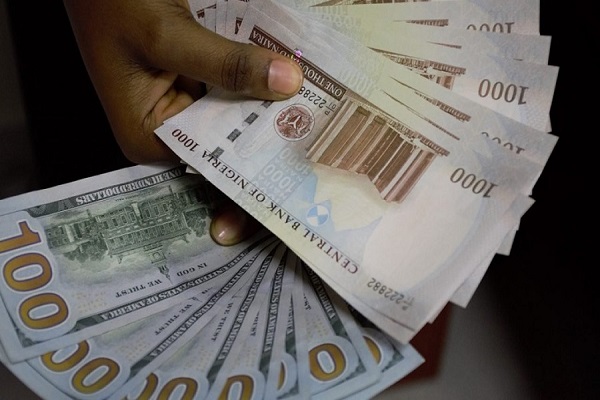
He left behind certified assets totaling #75 billion and around $500 million in cash and sovereign bonds for his successor.


**Education:**

Anambra faced challenges with low enrollment of male children and inadequate infrastructure. He restored schools to missionary management and provided direct funding, resulting in Anambra achieving the top position in WAEC/NECO performance rankings.


**Security and Infrastructure:**

The region of Onitsha and its surroundings experienced high crime rates and poorly developed road networks. He constructed over 658 kilometres of both urban and rural roads and systematically supported local vigilante groups to enhance economic stability.


**Public Integrity:**

The state often had confrontations with anti-corruption agencies. Throughout his tenure and afterwards, he maintained an unblemished record, with no post-office legal issues from the EFCC or security agencies related to fund misappropriation,” the statement concluded.

Court clears Jonathan for possible 2027 presidential comeback

A Federal High Court in Abuja on Tuesday dismissed a lawsuit seeking to stop former Nigerian President Goodluck Jonathan from contesting the 2027 presidential election, ruling that the ex-leader remains constitutionally eligible to seek office again if he chooses.

Justice Peter Lifu also imposed a combined N21 million fine on the plaintiff, Johnmary Jideobi, describing the suit as frivolous and an abuse of court process. The court awarded N20 million in favour of Jonathan and another N1 million in favour of the Attorney-General of the Federation.

The plaintiff had argued that Jonathan was constitutionally barred from contesting again because he had already been sworn in twice as president following the death of President Umaru Musa Yar’Adua in 2010 and his subsequent election victory in 2011. He relied on Sections 1 and 137(3) of the Constitution, insisting that the Independent National Electoral Commission, Independent National Electoral Commission, lacked the authority to accept Jonathan’s nomination for the 2027 election.

However, Justice Lifu held that the plaintiff lacked the legal standing to file the suit because he failed to show any personal injury or loss connected to Jonathan’s possible ambition. The judge also said previous rulings by the Federal High Court in Yenagoa and the Court of Appeal had already settled the issue in Jonathan’s favour.

Jonathan’s lawyer argued that the constitutional amendment being relied upon could not apply retroactively against the former president, who last contested an election in 2015. He described the case as politically motivated and cited earlier decisions including Andy Solomon v Jonathan and Cyracus Njoku v Jonathan, both of which upheld Jonathan’s eligibility.

The Attorney-General of the Federation supported Jonathan’s position and asked the court to dismiss the matter entirely. Government lawyer Maimuna Lami-Shiru also opposed a separate application asking Justice Lifu to withdraw from the case over alleged bias, describing it as baseless and without merit. The judge dismissed the recusal request before proceeding with the substantive suit.

Although Jonathan has not publicly declared interest in the 2027 race, speculation over a possible comeback has intensified in recent weeks. A faction of the Peoples Democratic Party reportedly backed by Oyo State Governor Seyi Makinde recently announced Jonathan as its preferred presidential candidate for the next general election.

Jonathan has neither accepted nor rejected the endorsement, but Tuesday’s ruling is expected to fuel fresh political discussions ahead of the 2027 elections.
Newsscroll

Atiku: Democracy has come to stay

The former Vice President of Nigeria and leading presidential aspirant in the African Democratic Congress (ADC), Atiku Abubakar, has said that democracy has come to stay in Nigeria.
The former Vice President made the assertion on Monday shortly after casting his vote at the Ajiya Ward Polling Unit in Jimeta Yola, Adamawa State.
The ADC presidential primary took place simultaneously yesterday in 8,809 Wards across the 36 states and the FCT.
 Atiku cast his vote amidst a cheering crowd of ADC party faithful who turned out to vote, Monday afternoon.
“The large turnout of voters is a clear indication of how party members are willing to participate in the ADC internal democratic processes”, the former Vice President said, adding “I have no doubt that democracy has come to stay.”
Voting started shortly after Atiku one of the three ADC aspirants (the others being former Rivers State Governor, Rotimi Amaechi and Mohammed Hayatudeen) arrived the venue from Abuja.
The returning officer for the election Hon. Umar Jada, earlier announced that Ajiya ward, had unanimously endorsed the candidature of Atiku Abubakar.
Voting started with the Waziri Adamawa leading a long queue of voters, at the end of which 3,220 votes were cast in favour of Atiku.

Tinubu’s borrowings in 2 years surpass Nigeria’s previous loans in 55 years


A damning new report has exposed the staggering pace of Nigeria’s borrowing, revealing that the President Bola Tinubu administration has accumulated more debt in just 24 months than the nation incurred during its first 55 years of independence.

Dele Oye, Chairman of the Alliance for Economic Research and Ethics, raised the alarm over the country’s unprecedented fiscal trajectory.

According to data from the Debt Management Office, Nigeria’s total public debt reached N159.28 trillion as of April 2026, meaning every single Nigerian now effectively owes N670,000. Oye warned that without immediate fiscal discipline, the country’s public finances face long-term paralysis.


Oye contrasted Nigeria’s current fiscal crisis with its economic high point in 2006, when President Olusegun Obasanjo wiped out $30 billion in Paris Club debt, leaving the country briefly debt-free.

The trajectory since then highlights a rapid escalation. Nigeria accumulated N12.06 trillion in its first 55 years of independence up to 2015. During the subsequent Buhari era, debt exploded by 620 percent to N87.38 trillion, heavily fueled by Central Bank’s Ways and Means money printing. The Tinubu administration has since added an additional N65.9 trillion in just two years, which is more than five times the total debt accumulated in Nigeria’s first five decades of independence.


While government officials frequently point to Nigeria’s debt-to-GDP ratio of 35.5 percent, which sits comfortably below the International Monetary Fund’s 55 percent distress threshold and looks healthier than South Africa’s 78.8 percent or Kenya’s 65.6 percent, Oye warns that this is a dangerous distraction.


He cautioned that the number that actually matters is the debt service-to-revenue ratio, which measures how much of every Naira earned goes straight to paying creditors. Nigeria’s ratio stood at 116.8 percent in 2024, easing only slightly to 113 percent in the first quarter of 2025. In January 2025 alone, Central Bank data showed the Federal Government paying out N696.27 billion in debt service against total retained revenue of just N483.47 billion, representing a crushing 144 percent coverage ratio in a single month.


Despite the grim numbers, Oye insists Nigeria has the tools and talent to avert disaster, provided there is political will. He outlined five non-negotiable prescriptions to salvage the economy, starting with the digitization and broadening of tax collection to expand the revenue base. He also called for strict enforcement of the Fiscal Responsibility Act with criminal sanctions for violators, alongside an immediate restructuring of Eurobond maturities before the heavy redemption wall hits between 2027 and 2029. Furthermore, Oye advised channeling future oil windfalls into a constitutionally protected stabilization fund and decentralizing revenue generation by empowering states to create wealth rather than relying entirely on monthly federal allocations from Abuja. Newsscroll.

ADC urges unity, discipline ahead of presidential primaries today

The African Democratic Congress (ADC) has called on its presidential aspirants, delegates, and party members nationwide to uphold unity, discipline, and democratic principles ahead of the party’s presidential primaries scheduled for today (Monday).
ADC is the only party with three presidential aspirants including former Vice President Atiku Abubakar, former Minister of Transportation Rotimi Amaechi and an economist Dr. Mohammed Hayatu-Deen.
In a statement issued on Sunday by the party’s National Publicity Secretary, Bolaji Abdullahi, the ADC described the forthcoming exercise as a defining moment not only for the party but also for Nigerians seeking a credible political alternative.
According to the party, the conduct of participants throughout the primary process would reflect the leadership values the ADC intends to promote.
“The ADC remains proud to stand today as the only truly democratic party in Nigeria, because it is the only political party whose choice of presidential candidate is determined through open primaries,” the statement said.
The party urged aspirants, their supporters, delegates, and members to conduct themselves peacefully and responsibly before, during, and after the exercise.
“This election must reflect the values we claim to represent as a party committed to transparency, internal democracy, national unity, and the rule of law,” Abdullahi stated.
The ADC acknowledged that disagreements and competition are natural features of democratic contests but stressed that the broader objective of offering Nigerians alternative leadership should take precedence.
“At the end of this exercise, there will be no winners or losers within the ADC family. The ultimate objective is to emerge stronger, more united, and fully prepared to offer Nigerians the competent and credible leadership they deserve,” the statement added.
The party also assured members that adequate arrangements had been made to guarantee a transparent, credible, and fair primary process.
“History will judge us, not merely by who emerges as candidate, but by how we conduct ourselves in this defining moment. We call on every member of our great party to rise to the occasion,” the statement concluded.
The ADC’s presidential primaries which will take place in all the 8,809 electoral wards in the country.
The party resorter to an open primary election as aspirations failed to reach a consensus in line with the Electoral Act 2026 as amended. Authority.

Obi rejects recurring, malicious anti-North accusation, calls it political manipulation


Peter Obi’s media office said it has noted the ongoing, baseless, and wholly malicious claims aimed at misrepresenting the governance record of Mr. Peter Obi, the former Governor of Anambra State, particularly concerning his interactions with individuals from Northern Nigeria during his time in office.

In a statement in Abuja on Sunday, the Office said: “It is regrettable, yet unsurprising, that political opponents—unable to confront Mr. Obi’s unmatched record of accountability, fiscal responsibility, and developmental progress—have once again resorted to the outdated and harmful tactics of ethnic and regional division.

“To clarify for the sake of informed Nigerians, we emphatically state: The recurring myth that Mr. Obi “repatriated” Northerners or specifically targeted Northern traders and beggars during his governorship is utterly unfounded.

“In truth, during Obi’s leadership, there was a compassionate social welfare initiative focused on assisting destitute individuals and unaccompanied minors from various states who faced severe vulnerability in Awka and Onitsha.

“There was never any form of “expulsion” or ethnic cleansing; instead, a structured social rehabilitation program benefitted individuals from across the nation.”

Putting the records straight, the Office said: “In contrast to the harmful narrative being propagated by those peddling discord in the political arena, Mr. Obi’s administration fostered an exceptionally strong, brotherly relationship with the Northern and Muslim communities in Anambra State.

“Records from his eight-year tenure demonstrate that even during times of significant national ethno-religious strife, Mr. Obi served as a protector for the Northern community, particularly in regions like the Onitsha Hausa Quarter (Ama Awusa).

“He worked diligently to prevent any retaliatory attacks on Anambra territory, earning considerable respect from local Northern leaders.

“Additionally, the Obi administration, which has been unjustly criticized, actively supported and sponsored Muslim residents in Anambra for their pilgrimage to Mecca, ensuring they received the same level of respect and governmental support as the Christian majority.

“Under Obi’s stewardship, Northern traders and livestock merchants in markets such as Amansea were provided with safe environments to operate, free from government-backed harassment or extortion.

“These accounts can be verified by anyone willing to fact-check, including those who challenge this narrative. The Hausa Fulani community in Onitsha and Awka can corroborate these facts.

“We understand the motivations behind this continued smear campaign; it relates to Obi’s transformative vision for the North as Nigeria’s key economic driver.

“Those attempting to create discord between Mr. Obi and the Northern populace are evidently threatened by his message of national productivity that aims to elevate those in poverty.

“Mr. Obi has consistently and openly asserted that Nigeria’s future lies in the untapped, fertile lands of Northern Nigeria. His vision focuses on shifting Nigeria from a consumption-driven economy to one of production, turning the North into Africa’s food hub and an agricultural powerhouse.”

The Office argued further that: “It is ironic that a leader who perceives the North as Nigeria’s most significant economic resource is being mischaracterized as its enemy by individuals who only engage with the region during election cycles.

“The Peter Obi media office does not intend to overlook this, even though the falsehood is apparent and the facts speak for themselves. As Joseph Goebbels once remarked, “A lie told once remains a lie, but a lie told a thousand times becomes the truth.” This falsehood will not endure, as Peter Obi possesses a vision for the geopolitical North that no other current Nigerian leader can match,” the Office concluded. Sunrisereporters.

Ganduje joins NDC, picks National Assembly form

Abdulaziz Umar Ganduje, eldest son of the immediate past National Chairman of the All Progressives Congress (APC), Abdullahi Umar Ganduje, has obtained the nomination form to contest for a seat in the House of Representatives on the platform of the National Democratic Congress (NDC). ‎

According to reports, Abdulaziz is seeking to represent the Dawakin Tofa/Tofa/Rimin Gado Federal Constituency of Kano State. ‎ ‎The development has sparked fresh  political interest in Kano, especially as Abdulaziz is widely regarded as a loyal member of the Kwankwasiyya political movement despite his father’s longstanding influence in the APC. ‎Politics

A viral video circulating on social media showed Abdulaziz in a discussion with the leader of the Kwankwasiyya movement and former Kano State governor, Rabiu Musa Kwankwaso, shortly after obtaining the nomination form.

He was reportedly seen briefing the former governor on his political ambition and readiness for the contest ahead of the next general election. ‎ ‎
The move marks another dramatic twist in the long-running political rivalry between Ganduje and Kwankwaso, two influential Kano political figures whose once-close alliance collapsed years after they jointly dominated the state’s political landscape. ‎ ‎

Abdulaziz has reportedly remained politically distant from his father’s camp for years, consistently identifying with the Kwankwasiyya movement. ‎ ‎

His political alignment attracted wider public attention following a controversial dispute involving his mother, Professor Hafsat Umar Ganduje, whom he once petitioned to the Economic and Financial Crimes Commission (EFCC) over an alleged failed agreement. ‎

Interestingly, Abdulaziz is now seeking the same House of Representatives seat contested by his brother, Umar Abdullahi Ganduje, on the platform of the APC in the 2023 general election. Umar lost the election to the candidate of the New Nigeria Peoples Party (NNPP) despite the political influence wielded at the time by their father, who was then governor of Kano State. Newsmakers.

Obi addresses immigration concerns for Nigerians in South Africa


Peter Obi, a leading opposition figure and the sole presidential candidate for the Nigeria Democratic Congress (NDC) in the upcoming 2027 election, has taken steps to ease the tensions between South African officials and Nigerian expatriates residing in the country.

Obi arrived in South Africa on Friday to participate in an international conference, where he engaged with Nigerians to gain insight into the immigration challenges they face.


In a post on his X account from South Africa on Saturday, he shared, “After speaking with Nigerians in Cape Town yesterday, I had constructive discussions this morning with three South African ministers and political party leaders concerning the ongoing issues related to immigration, regional collaboration, and promoting peaceful coexistence between our nations.


“I had the opportunity to meet Mr Leon Schreiber, the South African Minister of Home Affairs and a key member of the Democratic Alliance; Mr Velenkosini Hlabisa, the Minister of Cooperative Governance and Traditional Affairs and leader of the Inkatha Freedom Party (IFP); and Mr Gayton McKenzie, the Minister of Sports, Arts and Culture and leader of the Patriotic Alliance (PA).”


The former Governor of Anambra state further said: “Our discussions were open and productive, addressing the pressing issues impacting both countries—especially those concerning migration, economic difficulties, youth unemployment, security challenges, and the growing tensions faced by African foreigners in South Africa.


“I strongly believe that Nigeria and South Africa, both significant nations on the continent, must enhance dialogue, increase cooperation, and pursue solutions rooted in justice, mutual respect, and adherence to the rule of law.


“In these difficult times, both leaders and citizens need to exhibit responsible leadership, show compassion, and exercise restraint.


“We collectively emphasised the need for law-abiding behaviour, the importance of avoiding violence, resisting hate or provocation, and allowing lawful institutions to handle grievances through democratic and constitutional means, regardless of the challenges we encounter.


“The future of Africa relies on our capacity to foster unity, promote economic inclusivity, invest in our communities, and uphold the dignity of every African, regardless of their location,” Obi stated.

UN warns: 35m Nigerians to face acute hunger from June


The United Nations (UN) has warned that about 35 million Nigerians are at risk of acute hunger from June to August 2026.


The UN Humanitarian Country Team said Nigeria was facing a deepening hunger crisis, with millions at risk as the lean season approaches.


“Nearly one in seven people, that is 35 million people nationwide in Nigeria, are likely to face acute food insecurity during this year’s lean season, which runs from June to August,” the agency stated in its latest humanitarian response plan report release on Friday, May 22, 2026.


The UN said the latest report makes Nigeria one of the world’s largest hunger crises, with the burden falling overwhelmingly in northern part of the country.

“If assistance is further delayed, millions of families will be forced to further reduce meals, sell assets or withdraw their children from school with the long term impact that we know that has,” the UN added.


Across North-West and North-East Nigeria, the UN said an estimated 6.4 million children are likely to be acutely malnourished this year.


“We and our partners are appealing for urgent funding to scale-up life-saving assistance,” the global multilateral body said.


The UN said the already hyper-prioritised 516 million dollars Humanitarian Needs and Response Plan for the year 2026 is just over 40 per cent funded.


According to report, only $215 million out of $516 million have been received as of May 2026. Conclave.


The United Nations (UN) has warned that about 35 million Nigerians are at risk of acute hunger from June to August 2026.


The UN Humanitarian Country Team said Nigeria was facing a deepening hunger crisis, with millions at risk as the lean season approaches.


“Nearly one in seven people, that is 35 million people nationwide in Nigeria, are likely to face acute food insecurity during this year’s lean season, which runs from June to August,” the agency stated in its latest humanitarian response plan report release on Friday, May 22, 2026.


The UN said the latest report makes Nigeria one of the world’s largest hunger crises, with the burden falling overwhelmingly in northern part of the country.

“If assistance is further delayed, millions of families will be forced to further reduce meals, sell assets or withdraw their children from school with the long term impact that we know that has,” the UN added.


Across North-West and North-East Nigeria, the UN said an estimated 6.4 million children are likely to be acutely malnourished this year.


“We and our partners are appealing for urgent funding to scale-up life-saving assistance,” the global multilateral body said.


The UN said the already hyper-prioritised 516 million dollars Humanitarian Needs and Response Plan for the year 2026 is just over 40 per cent funded.


According to report, only $215 million out of $516 million have been received as of May 2026. Conclave.