By Ike Abonyi
” _To be an enemy of America can be dangerous, but to be a friend is fatal.”_
— Henry Kissinger, former U.S. Secretary of State.
The upcoming make-or-mar 2027 Nigeria’s Presidential election is being increasingly dominated by the figure of U.S. President Donald Trump, who has become a pivotal, almost decisive, element in Nigeria’s political landscape. His influence is so pronounced that Nigeria’s democratic trajectory appears, at times, to be that of a political dependency of the United States, with Trump himself acting as the de facto arbiter of its democratic destiny. This centrality is not accidental; Trump has emerged as the ‘Trump card’ – a metaphor drawn from card games signifying a hidden advantage or decisive resource – for the crucial 2027 polls.
In narrative contexts, a trump card is a potent tool, a secret weapon or unexpected advantage deployed at a critical moment to shift power dynamics and secure victory dramatically. It allows a character to circumvent established rules or resolve narrative impasses. The anticipation of when and how this secret weapon will be revealed builds suspense, offering insight into the character’s strategic acumen. In essence, a trump card is typically revealed at a very crucial moment to transform a potential loss into a decisive victory.
This concept is directly applicable to Nigeria’s political arena. The author plants the seeds of this ‘secret advantage’ beforehand, allowing the audience or opponents to sense its existence, even if its precise nature and timing remain unknown. By all accounts, Nigeria’s democratic journey towards the 2027 election is faltering, and Donald Trump has become the critical factor poised to be the election’s ultimate trump card.
A recent example of Trump’s impact was a wave created by a purported letter from him to Nigerian President Bola Ahmed Tinubu, commending his administration’s efforts against terrorism. This message, arriving six months before a critical presidential election, was a significant boon for the ruling party and a source of consternation for the opposition. Regardless of the letter’s authenticity, the intense reactions it generated underscored Trump’s strategic importance in Nigeria’s electoral calculus.
The ruling party swiftly leveraged this purported endorsement for political gain, while the opposition vehemently disputed its legitimacy. This divergence in how both factions engage with Trump highlights his crucial role as the ‘trump card’ that could significantly shape the 2027 presidential outcome. This concern is rooted in historical precedent; in 2015, the U.S. played a role in the downfall of the then-ruling President Goodluck Jonathan and his Peoples Democratic Party, PDP, and led to the rise of the current ruling All Progressives Congress, APC.
Interestingly, both the ruling party and the opposition are now seeking Trump’s favour, albeit for different reasons. The incumbent government is hoping that Trump will overlook their numerous shortcomings – such as questionable backgrounds, corruption allegations, and electoral manipulation records that are very well known to the U.S and look the other way to enable them to capitalise on their incumbency advantages. Conversely, the opposition is strongly imploring Trump to take a more active interest in the election, specifically by critically scrutinising the known dirty dealings of President Tinubu while he lived in the U.S. Their primary demand is for Trump to facilitate a free, fair, and credible election, a prospect that deeply unsettles the ruling party.
This intense focus on Donald Trump raises questions about Nigeria’s sovereignty, making it appear more like a political colony than an independent African nation. This reliance on an external ‘trump card’ reflects a persistent tendency to embrace undemocratic practices.
Trump’s involvement in Nigeria’s political discourse intensified after he secured a second term in 2024, sparking hope among the opposition that he would champion democratic reforms. However, his subsequent actions have been unpredictable, creating ambiguity.
The appointment of his son-in-law, Massad Bolous, a known ally of the Tinubus in charge of African Affairs, opened the door for suspicion on Trump’s real agenda for Nigeria, especially the vital 2027 poll.
Consequently, both the Tinubu administration and the opposition, propelled by former Vice President Atiku Abubakar, are expending considerable resources and energy lobbying in the U.S. rather than engaging directly with the Nigerian populace. Their focus is not on mobilising voters, whose ballots often carry little weight, but on securing the ‘trump card’ that could influence the U.S. stance on electoral fraud or support for a fair election.
These ‘Trump Card’ variables are not peripheral to the 2027 election; they represent a significant geopolitical influence with Nigeria at its centre, reshaping global electoral dynamics. U.S. political rhetoric under President Trump acts as a major catalyst for the approaching pivotal election.
Various Political commentators term these influential factors ‘Trump Cards,’ which local candidates and coalitions must either leverage or counter. When discussions arise about Nigeria ‘awaiting’ Donald Trump’s influence on the 2027 election, they consider how shifts in U.S. foreign policy and global geopolitics under his presidency might affect Nigeria’s political landscape.
While Trump does not directly control Nigerian elections, a U.S. presidency significantly impacts the economic climate, diplomatic relations, and campaign narratives. The strategic manoeuvring by President Tinubu and the fragmented opposition, including their lobbying efforts, are shaping the electoral dynamics. Meanwhile, a substantial portion of Nigerian voters remain undecided, not strongly aligned with either side of the Atiku/Tinubu lobbying teams.
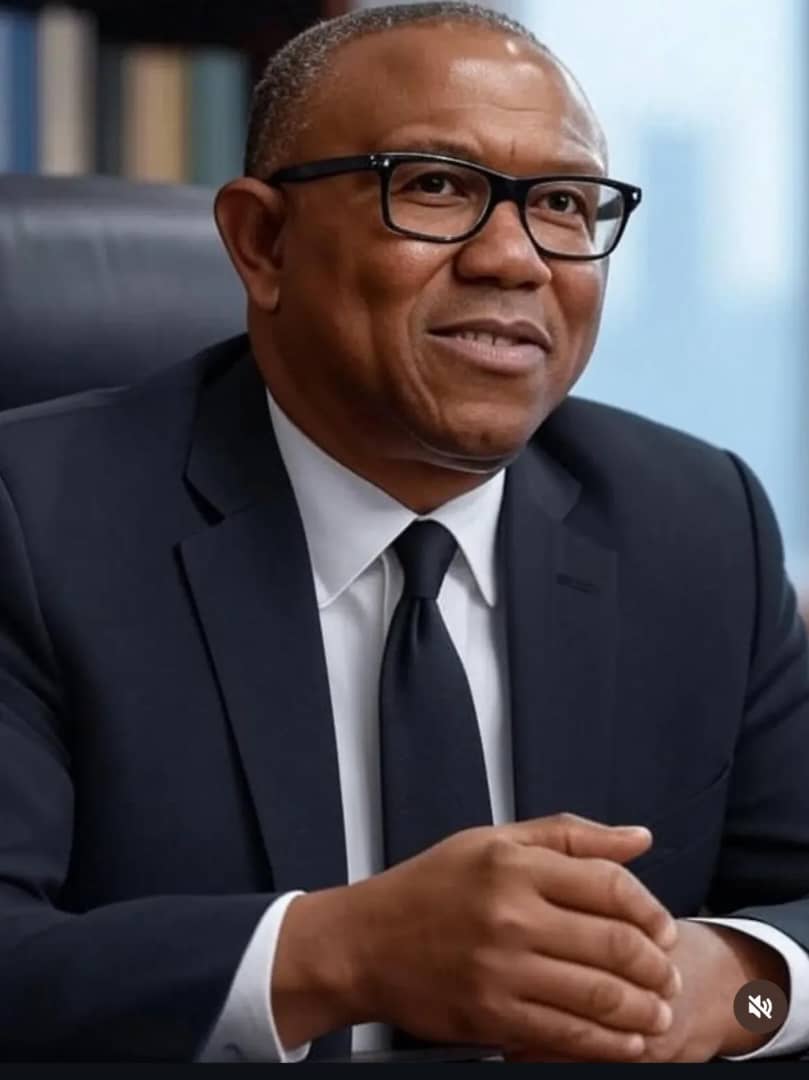
Instead, they are seeking fundamental changes in their governance, and many see Peter Obi and the Nigeria Democratic Congress (NDC) as embodying this desire, owing to his unimpeachable record of integrity and prudence.
In contrast, the incumbent administration under Tinubu is concentrating its efforts on employing statecraft, international diplomacy, and cross-party alliances to solidify its prospects for re-election. The administration has actively pursued foreign policy avenues and engaged reputable international lobbying firms in Washington to promote its stringent macroeconomic policies—including the removal of fuel subsidies and the unification of foreign exchange rates—as crucial measures for achieving long-term economic stability and growth.
A significant strategy of the APC’s lobbying contingent involves weakening opposition structures by encouraging the defection of prominent opposition figures, such as state governors. Furthermore, there are concerted attempts to financially incentivise certain youth groups and other state-level organisations before the official campaign period commences.
Regrettably, despite acknowledging that a divided opposition contributed to the APC’s victory in 2023, Atiku Abubakar’s lobbying efforts do not appear to be prioritising the unification of opposition platforms. This is likely due to his unwillingness to make the necessary concessions, as the established political office zoning arrangements are not advantageous to him.
Notwithstanding, the current Tinubu administration appears vulnerable, potentially to a fractured opposition bolstered by the Obi/Kwankwaso alliance—especially given the prevalent cost-of-living crises and security concerns, which frame the election as a direct judgment on the incumbent’s performance. Renowned Ghanaian first President Kwame Nkrumah’s observation about neo-colonialism resonates with Nigeria’s current democratic experience: ‘The essence of neo-colonialism is that the State which is subject to it is, in theory, independent… In reality, its economic system and thus its political policy are directed from outside.’
Similarly, a former US Secretary of State, Zbigniew Brzezinski, articulated America’s pragmatic approach for a Nigerian lesson that: ‘America has no permanent friends or enemies, only interests.’ May divine intervention guide us.