
*At the presentation of Prof Ogboli’s White Guava and War
A leading communications professional has called for renewed investment in Nigeria’s publishing industry, warning that declining reading habits and weak distribution networks continue to threaten literary development across Nigeria and the African continent.
Reviewing White Guava and War, the autobiography of Nigerian academic, Professor Ashiedu Ogboli, at the National Universities Commission (NUC) Headquarters in Abuja on Tuesday, Joseph Ollor Obari urged governments, investors, educational institutions and cultural stakeholders to strengthen support for publishing as a cornerstone of intellectual and national development.
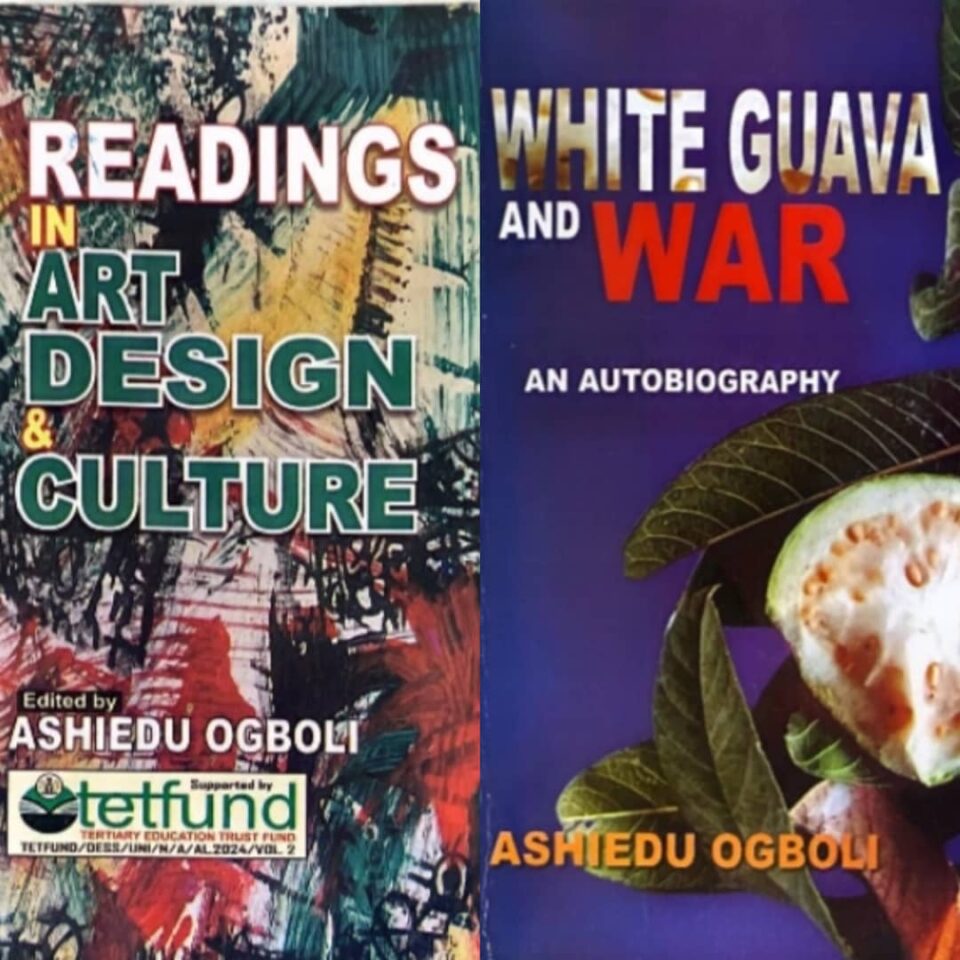
Published in 2026 by Ahmadu Bello University Press Ltd, White Guava and War chronicles Professor Ogboli’s life experiences while exploring broader themes of education, resilience, conflict, personal growth and nation-building. Another of author’s work, Readings in Art, Design and Culture was presented at the event.
Obari in his review, reflected on the decline of Nigeria’s once-vibrant publishing sector, noting that many prominent publishing houses struggled to survive the economic disruptions that followed Nigeria’s implementation of the World Bank’s Structural Adjustment Programme (SAP) under the military regime of Ibrahim Babangida in the 1980s.
“For quite some time, all was not well in the world of publishing in Nigeria,” Obari said. “We lost not only publishing houses but also the structures that supported authorship and provided a dependable economic backbone for the intellectual property industry.”
He observed that the decline of traditional publishing institutions led many writers to embrace self-publishing, often without access to professional editorial support and structured distribution network.
“A writer is often not the best editor of his own work,” he noted. “Every author benefits from independent professional editors who can identify weaknesses, improve clarity and strengthen the overall quality of a manuscript.”
Obari identified book distribution and marketing as the most significant obstacles facing authors in Nigeria and many other developing markets.
“Without the networks and resources of established publishing houses, authors are frequently left to carry the burden of bringing their books to readers,” he said. “Even outstanding literary works can struggle to find their audience.”
While welcoming signs of renewed growth within Nigeria’s publishing ecosystem, Obari appealed for greater private-sector investment in the book industry.
“There should be a collective effort to restore publishing to the place it deserves in society,” he said. “Books remain among humanity’s most powerful tools for developing minds, preserving knowledge and building nations.”
The reviewer was concerned that such digital culture impacts as shortened attention spans, increasing dependence on abbreviations and informal language have eroded sustained engagement with books and long-form writing.
Describing White Guava and War as a compelling autobiographical work, Obari said the book successfully combines humour, vivid description and intellectual engagement while offering readers valuable insights into the author’s life journey and broader societal issues.
“White Guava and War is a reflective autobiographical work that masterfully weaves personal experiences around serious themes. It is at times humorous, at other times provocatively descriptive, and consistently intellectually engaging,” he remarked.
He recommended the book to teachers, students, researchers, book lovers and the general reading public, describing it as a valuable addition to Nigeria’s growing body of literary and autobiographical works.
White Guava and War is the autobiography of Professor Ashiedu Ogboli, a distinguished Nigerian academic and scholar. Published by Ahmadu Bello University Press Ltd in 2026, the book presents a compelling account of personal experiences set against wider social and historical developments, offering readers an engaging perspective on life, learning and nation-building in Nigeria.