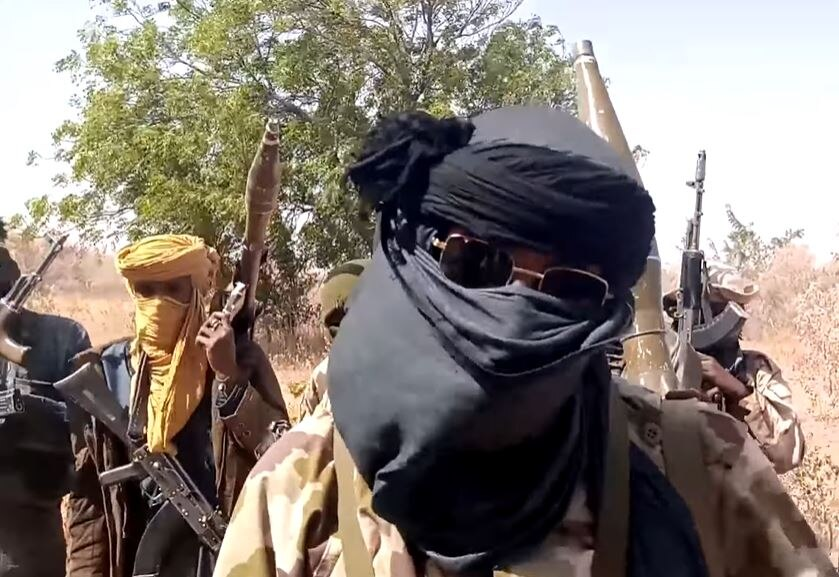
Court sentences 11 Boko Haram members to up to 60 years imprisonment


The Federal High Court in Abuja has sentenced 11 members of the extremist group Boko Haram to prison terms ranging from 40 to 60 years for terrorism-related offences.


Delivering judgment, Justice Obiora Egwuatu held that the convictions were based on the defendants’ confessional statements and guilty pleas in open court. He ruled that the law permits courts to convict without requiring further proof once an accused person admits guilt.


The convicts Musa Mustapha, Ali Mohammed, Babagana Ali, Abacha Abba, Ali Abbagana Umar, Kadi Agwala, Yahaya Umara, Alhaji Ari, Goni Mustapha, Ali Modu, and Alhaji Fannaya were found guilty of offences including membership in a proscribed organisation and providing logistical support to terrorist activities.


The court ordered that their sentences run concurrently from the date of arrest. It also directed that the convicts undergo rehabilitation and de-radicalisation programmes after serving their jail terms.


Among those convicted: Alhaji Fannaya received 20 years imprisonment on each of four counts after pleading guilty to multiple charges.


Abacha Abba was sentenced to 20 years on each of three counts, including transporting weapons and undergoing terrorist training.


Ali Babagana Umar and Kadi Agwala were each handed 20-year sentences on two counts related to aiding the group.


In a separate case, Justice Peter Lifu sentenced Ali Kolo to nine years imprisonment for failing to report terrorist activities, despite acknowledging that he had been shot by insurgents while attempting to alert authorities.


The court ruled that although Kolo failed in his legal duty to report, his circumstances were beyond his control. Since he had already spent over a decade in detention, the judge ordered his immediate release.


Similarly, Ibrahim Buba, a bricklayer from Borno State, was sentenced to 10 years imprisonment for withholding information about terrorist activities. He admitted knowing members of the group but fleeing the state instead of reporting them to authorities.


The prosecution, led by government counsel David Kaswe, relied on provisions of the Terrorism (Prevention and Prohibition) Act, which mandates citizens to disclose information about terrorist operations to security agencies.


The rulings underscore the judiciary’s continued enforcement of anti-terrorism laws, while also highlighting considerations of fairness and circumstance in sentencing.

Starnews

How David Mark, Aregbesola hijacked ADC – Abejide


A member of the House of Representatives representing Yagba Federal Constituency in Kogi State, Leke Abejide, has faulted the process through which the David Mark-led leadership emerged in the African Democratic Congress (ADC).

He claimed that some prominent politicians have hijacked the ADC amid the party’s deepening leadership crisis.

The lawmaker made the allegation on Thursday during an appearance on Channels Television’s  Politics Today.

When asked to clarify the identities of the “hijackers,” he said, “Former Senate President David Mark, former Governor of Osun State, Rauf Aregbesola, and the rest.”


He pointed out that proper consultation with existing party members was not carried out before the Mark leadership emerged.


“If you want to come to a party, and it is not a fresh one, you should know that some people are there. Why don’t you meet with them first and discuss?” he said.


Asked whether he had ever held meetings with key figures reportedly involved in the coalition, including Atiku Abubakar, Rotimi Amaechi, and Peter Obi, Abejide responded, “No, I have never met with them. None of them has ever met me.”


The lawmaker also dismissed suggestions that he was sidelined because he was perceived as a “sellout,” stating, “I am not a sellout. It is not because they didn’t consult me; let us do things according to the law. This party cannot be destroyed.”


Citing the ADC constitution, Abejide argued that the appointments of Mark and others violated established rules.


He maintained that those who assumed leadership positions had not fulfilled these requirements at the time.


“As at the time they sat on their seats, they had not registered in their wards. They were not members of the ADC as at the time they took over,” he said.


“What they ought to have done is to allow them to come in, then write to INEC, give 21 days’ notice for a national convention, and amend the constitution properly… By then, nobody can go to court. But that was not the case; they immediately took over that day as if the election were tomorrow,” he stated.

Newspotng

8 killed in fresh Plateau attack by Fulani terror group as troops intensify clearance operations, kill 13 terrorists in in Wase, Kanam LGAs


Suspected Fulani Bandits have killed eight residents in Mbwelle Village, Kwatas District of Bokkos Local Government Area of Plateau, in the latest wave of tit for tat attacks in the state.

The incident occurred at about 10:30 p.m. on April 9, according to security sources.

The victims were identified as Habila Istifanus (38), Hassan Istifanus (31), Iliya Mangut (70), Sunday Gideon (31), Innocent Banabas (20), Lucky Titus (38), Wisdom Lucky (15), and Bwehsun Hassan (25).


Joint security forces responded to the distress call but did not establish contact with the attackers, who fled before their arrival.


A security source attributed the delayed response to the distance of about 15 kilometres between the troops’ base and the community, as well as difficult terrain.


All casualties, including the injured, were evacuated to Bokkos Cottage Hospital, while troops have launched pursuit operations to apprehend the fleeing militia.


Earlier on April 9, troops under Operation Wutan Daji recorded a major operational success in Wase and Kanam LGAs, neutralising 13 suspected terrorists during an offensive along identified corridors in Daba and Seri villages.


The troops had established blocking positions between Dutsen Zaki and Odare Forest, where they intercepted armed elements moving on motorcycles.


Recovered items included two motorcycles, five 25-litre jerrycans of Premium Motor Spirit (PMS), one AK-47 rifle, and a magazine loaded with three rounds of 7.62mm special ammunition.


Military sources said several fleeing terrorists escaped with gunshot wounds, while clearance operations remain ongoing.


In a separate operation on the same day, troops of 33 Artillery Brigade, in collaboration with the Office of the National Security Adviser (ONSA), conducted clearance operations in Daji Madam Forest, targeting camps at Dogo Ruwa and Bogwas.


The operation, supported by troops of a Combat Support Infantry Battalion and Civilian Joint Task Force (CJTF), led to the rescue of 21 kidnapped victims and the destruction of multiple bandits’ enclaves, including one linked to a notorious leader identified as Auta Kachalla.


Items recovered included one G3 rifle, four magazines, three generating sets, and a solar panel.


Despite these gains, security incidents have persisted across Barkin Ladi, Riyom, Jos South, and surrounding areas.


On April 8, troops of Operation Enduring Peace (OPEP) foiled an attack on commuters along the Razat–Kafi Abu road in Barkin Ladi LGA, where one civilian was killed and two others injured.


Later the same day, troops repelled a militia attack along the same axis and conducted a cordon-and-search operation in Suma Suga Takwok, recovering two AK-47 rifles, two magazines, and five rounds of 7.62mm ammunition.


In Riyom LGA, one civilian was killed in an ambush along the Dagbam bridge axis on the GOL–HOSS–Bwei road, while two others escaped unhurt. Troops also foiled an attack on Jol community on April 7, forcing the assailants to retreat without casualties.


Similarly, troops rescued one victim and recovered ammunition following an earlier attack in Dum village, Bachi District, where another victim was found dead.


Security operatives also intercepted 16 stray cattle grazing on farmland in Tahoss community, an incident linked to recurring disputes between farmers and herders.


The pattern of violence reflects a sustained cycle of reprisals between farming communities and pastoral groups.


On April 5, a Fulani herder, identified as Abubakar Hababe (40), was found dead in Riyom LGA in what sources described as a reprisal attack. The killing by suspected Berom Militia was reportedly linked to earlier incidents, including the attack on an illegal mining site in Gyel village where three miners were killed.


Other incidents include the discovery of the body of a 30-year-old herder, Shafiyu, in Jos South LGA, and the killing of a Fulani boy, Abdullahi Mohammed, in Mangu LGA.


Tensions were escalated since March 28, after the assassination of a Fulani leader, Alhaji Bilyaminu Julde, the Ardo of Gindiri in Barkin Ladi LGA.


Security reports also identified repeated destruction of farmlands and cattle rustling, further aggravating hostilities between communities.


Authorities said troops and other security agencies have intensified patrols, surveillance, and community engagements across affected LGAs to prevent further escalation.


“Operations are ongoing to dominate the general areas, dismantle criminal networks, and restore normalcy,” a security source said.


The developments illustrate the complexity of the security situation in Plateau, where counter-terrorism operations intersect with long-standing communal tensions, making sustained peace efforts increasingly challenging.


Security agencies have urged residents to remain calm, avoid reprisals, and provide credible information to support ongoing operations aimed at restoring lasting peace in the state. Globalupfront.


Abuja: 2 killed in farmers-herders clash in FCT community, residents flee


Residents of Kudu community near Takuro in Dafa Ward of Kwali Area Council in the Federal Capital Territory (FCT) have fled their homes following a clash between farmers and herders that left two persons dead and six others injured.

A member of the community, Ishaku Shuaibu, who confirmed the incident via telephone on Thursday, said it occurred around 8.43am on Tuesday.

He said the clash began after cows belonging to herders allegedly fed on mangoes in the community, which reportedly led to the sudden death of two of the animals.


According to him, the owner of the cows later accused the owner of the mango tree of poisoning the fruits.


Shuaibu said one of the herders invited villagers to the scene where the dead cows were found.


“On getting to the scene, one of the herders suddenly pulled out a cutlass and stabbed two villagers, killing one on the spot,” he said.


He added that another victim, who lost his right hand in the attack, was rushed to a hospital in Gwagwalada but later died while receiving treatment.


Shuaibu said the killings heightened tension in the community, with some youths allegedly attacking and burning herders’ settlements.


He noted that fear escalated following rumours of a reprisal attack, forcing many residents to flee to neighbouring communities.


“It was after some herders’ settlements were burnt that rumours spread that the herders were mobilising for a reprisal attack, prompting villagers to flee,” he said.


Displaced residents were said to have taken refuge in Ashara, Fogbe, Kuka and Wako communities.


Security operatives, including personnel of the DSS, police and the military, have been deployed to restore calm.


Reacting, the FCT Treasurer of the Miyetti Allah Cattle Breeders Association of Nigeria (MACBAN), Alhaji Abdullaziz Ibrahim, confirmed the incident but said details remained unclear.


“I was informed about the incident, but there are conflicting accounts. Some say the mangoes were poisoned, while others claim a pond where the cows drank water was contaminated. I cannot give clear details for now,” he said.


He, however, confirmed that security operatives had been deployed to restore normalcy.


Also speaking, the FCT MACBAN Chairman, Alhaji Wakili Madugu, said he had received reports of the incident but could not provide details.


A police source at the Gwagwalada command, who preferred anonymity, also confirmed the incident, stating that one person died instantly while another died in hospital.


The source added that operatives from the Kwali Division, alongside the army and DSS, had been deployed to contain the situation.


Efforts to get official confirmation from the FCT Police Command were unsuccessful, as the spokesperson, SP Josephine Adeh, did not respond to calls or text messages as of the time of filing this report.

@Daily Trust

Insecurity: Obi raises alarm over U.S. security advisory on Nigeria, laments killing of General Braimah, 17 soldiers in Borno


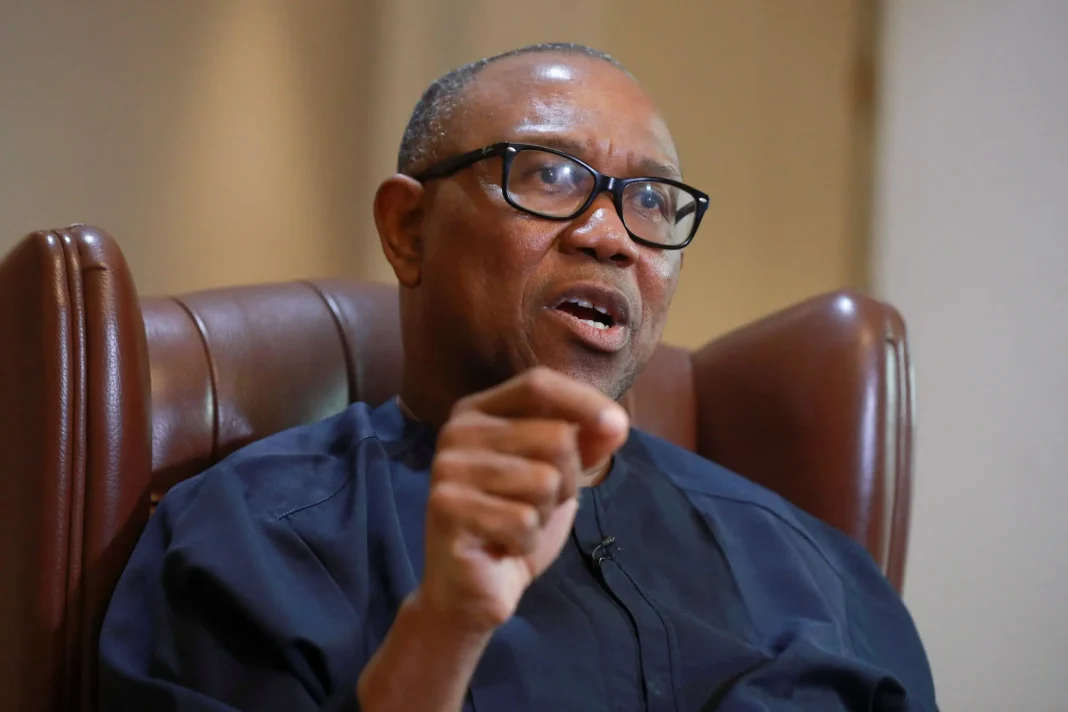
The African Democratic Congress (ADC) Presidential hopeful and 2023 election Presidential candidate of Labour Party, Peter Obi, has expressed deep concern over the decision by the United States (U.S.) to evacuate its embassy staff from Nigeria, saying it is “a troubling signal of worsening insecurity and declining global confidence in the country.”

Obi, who referenced the killing of Commander, 29 Brigade, Brigadier General Oseni Braimah and 17 soldiers in Borno State, said it is further evidence of the dangerous conditions facing both civilians and security personnel.


Reiterating that the primary responsibility of any government is the protection of lives and property, Obi likened the current ruling political class in Nigeria to Nero, accusing leaders of being distracted by politics while the country grapples with deepening insecurity.


In a strongly worded statement posted on his social media platforms and titled – ‘U.S. Security Alarm on Nigeria: A Bad Omen,’ the former Governor of Anambra State said: “The recent directive by the United States to evacuate its embassy staff from Nigeria due to rising insecurity is deeply worrisome and should be treated as a national emergency, especially for a country already struggling to attract investors.


“Nigeria currently ranks fourth in the Global Terrorism Index, yet insecurity continues to worsen – lives are being lost and communities remain under constant threat. There is a glaring absence of effective governance; instead, what prevails are schemes that undermine democratic processes, as though politics has taken precedence over the safety of citizens.


“The U.S. directive is a clear signal of declining confidence in our national security architecture. Disturbingly, reports indicate the loss of yet another Army Brigadier General to terrorists in Borno earlier today. A nation where people cannot live, work, worship, or travel safely cannot progress or attract investment. The primary duty of any government is the protection of lives and property, yet in this regard, we as leaders have fallen short over the years.


“Our failure continues to place immense strain on our troops, who make the ultimate sacrifices. Sadly, as Nigeria deteriorates, we as leaders, like Nero, remain preoccupied with politics, forgetting that without security, there is no nation to govern and no future to campaign for. A New Nigeria is POssible. -PO.”


Evaluating Peter Obi’s mental and physical fortitude for the task ahead


By Ike Abonyi

How mentally and physically prepared are those vying for high offices in Nigeria? When you see President Bola Ahmed Tinubu unable to visit the countryside to see and feel the people he is ruling, it’s because he lacks the necessary mental and physical ability to do so, and no matter how much you may desire it, you cannot give what you don’t have. When a President of a country addresses crisis victims at an airport far from the scene, it shows no sign of empathy. And the truth is that he is lacking both mental and physical empathy needed for such an environment.


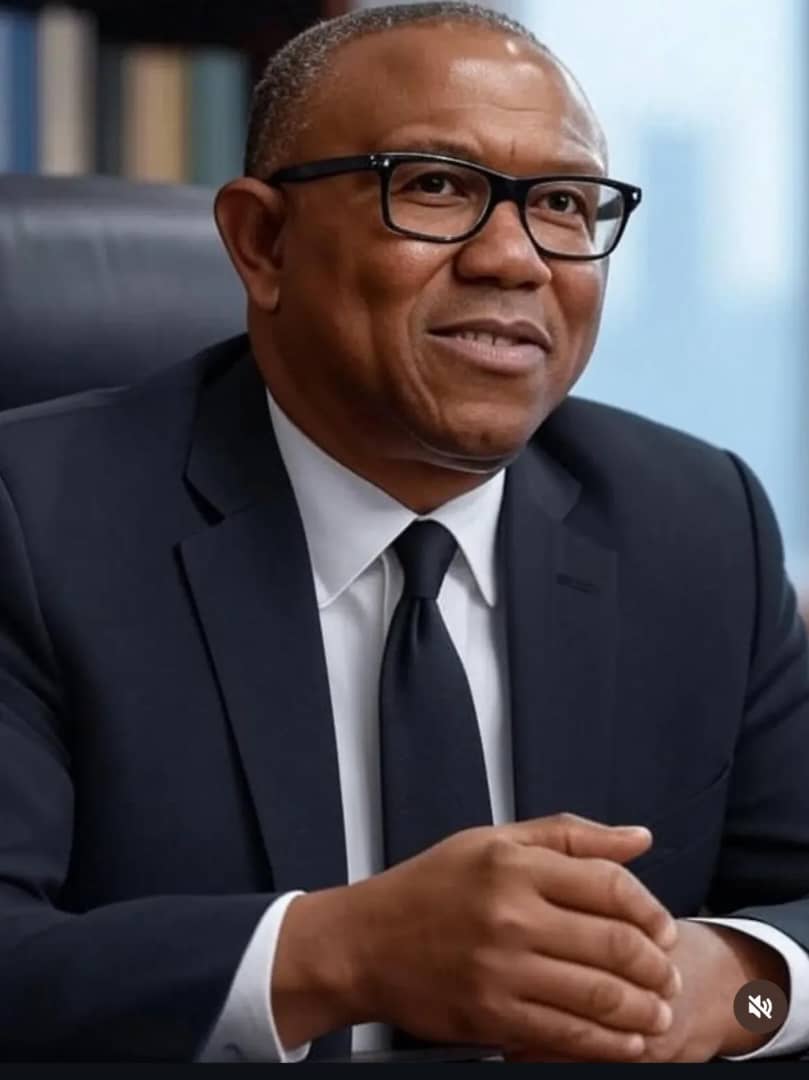
​In the pursuit of high-office leadership, the intersection of intellectual rigour and physical stamina often determines the success of a mandate. Peter Obi is standing out because he has consistently projected a profile that emphasises these two pillars as the foundation for his readiness to address national challenges.


​Mental readiness in leadership is defined by the ability to synthesise complex data into actionable policy. Obi’s approach is characterised by his habitual reliance on global comparative statistics suggesting a mind constantly auditing performance and seeking scalable solutions. His cognitive agility comes through extensive town halls and unscripted engagements. He always demonstrates an ability to navigate diverse subjects—from fiscal policy to internal security—without losing thematic consistency. His mental preparedness is also reflected in emotional intelligence; maintaining a measured, “issue-based” discourse even in highly polarised political environments.


The Logistics of presence by a leader cannot be underestimated and Obi understands that the “task ahead” for any transformative leader requires gruelling schedules and a presence that spans vast geographical and social landscapes. Like Peter Obi has copiously demonstrated endurance and vitality which makes his itinerary often involving back-to-back cross-country travels and long-form media sessions that serve as a practical demonstration of physical aerobic capacity and resilience. By opting for a lean, high-mobility lifestyle, he signals a rejection of sedentary governance, favouring a “boots-on-the-ground” style that demands constant physical activity. Physical readiness is rarely accidental; it is the byproduct of disciplined personal habits that ensure a leader remains alert and capable during periods of high-intensity crisis management.

​As Obi has consistently shown, true preparedness for leadership is not found in mental or physical strength alone, but in their synchronicity. The task ahead involves any aspiring leader of a country of over 200 million people of diverse backgrounds in culture, religion, and development to have what it takes to break down complex national issues. This requires mental alertness and the execution of solutions across the federation which needs physical strength, and a combination of the two which entails sustaining the momentum of reform over years, not months.

Now that Nigeria is in its leadership recruitment process, these critical things are being overlooked. Physical and mental dead woods are on the stage occupying space and multiplying the confusion because for such people the real agenda is not service but corrupt acquisition of public resources for personal gain.

​The narrative of Peter Obi’s preparation suggests a candidate who views leadership as an athletic and intellectual commitment. This dual-track preparedness is presented not just as a personal trait, but as a prerequisite for the heavy lifting required to navigate contemporary socio-economic complexities. These things set him out and explain why he cannot be extinguished no matter how they try. A New Nigeria is possible is not a political slogan but a divine declaration backed by practical disposition.

Seven Northern states to experience weeks of power cut

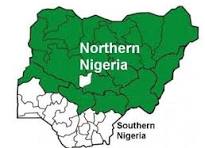
Electricity consumers across seven northern states are set to face prolonged power disruptions as the Nigerian Independent System Operator begins a major upgrade of the Jos–Gombe transmission line.The affected states, Plateau State, Gombe State, Bauchi State, Borno State, Adamawa State, Taraba State, and Yobe State will experience scheduled outages from April 9 to May 22, 2026.

According to the system operator, the outages will occur weekly from Thursday to Sunday, between 9:00 a.m. and 6:00 p.m., as part of efforts to modernise Nigeria’s electricity grid.

The upgrade involves installing Optical Ground Wire (OPGW) fibre optic infrastructure along the Jos–Gombe 330kV transmission corridor.

This is expected to enhance grid performance through improved real-time monitoring, fault detection, load balancing, and overall energy distribution efficiency.

Despite plans to maintain supply through alternative 132kV transmission lines, authorities have warned that consumers will likely experience reduced electricity during outage periods due to limited network capacity.

The project forms part of broader reforms aimed at strengthening Nigeria’s power infrastructure, including improved SCADA (Supervisory Control and Data Acquisition) systems and Energy Management Systems.

Officials say the temporary disruptions will yield long-term benefits such as improved power reliability, faster fault response, enhanced grid stability, and better coordination across the electricity network.

The operator also confirmed ongoing collaboration with distribution companies and stakeholders, including the Transmission Company of Nigeria, to minimise the impact on consumers.

While apologising for the inconvenience, the agency urged residents to cooperate, noting that the upgrade is critical to building a more resilient and efficient national grid. Star news.

A timely memo for Prof Amupitan


By Ike Abonyi

Dear Honourable Chairman,

Prof. Joash Amupitan, I am compelled to address you through this memo, emphasising the critical responsibility you hold as the Chairman of the Independent National Electoral Commission (INEC). At a start, I need you to reflect on the following four Marble words: “If a referee is also a player for the opposing team, the match is over before it begins” (Political Adage); “It’s not the voting that’s democracy; it’s the counting” (Tom Stoppard); “An umpire who favors one side doesn’t just ruin the game; they destroy the sport itself” (Sports Metaphor); and “When a shepherd is a friend to the wolf, the sheep are never safe” (Folk Proverb).
Guided by the above quotes plus your credentials as a seasoned legal professional and Senior Advocate of Nigeria (SAN), it’s safe to conclude that you possess a deep understanding of the legal and ethical responsibilities that come with your role. I presume that, as a professor, you are also very aware of the meaning of “independence” and the serious ramifications of straying from it in your new role. It is from this perspective that I am writing this memo to you as a concerned citizen and voter in Nigeria. Since your appointment in October 2025, there has been a sense of cautious optimism surrounding our democracy, yet the approaching 2027 general elections demand your unwavering commitment to a “free and fair” electoral process more than ever.
However, your recent decisions as Chairman have cast a shadow on this optimism. The handling of political party registrations under your watch has raised significant concerns about your neutrality. Furthermore, your apparent bias in favour of the ruling party, which threatens to marginalise the opposition in a diverse nation of over 200 million people, is unacceptable.
The hide-and-seek behaviour of INEC under your watch in addressing the Supreme Court’s April 2025 ruling on the Labour Party leadership crisis until January 7, 2026, after the departure of Peter Obi, reflects poorly on your leadership. Your complicity in the disruptive actions of the FCT Minister Nyesom Wike regarding the Peoples Democratic Party (PDP) and your inappropriate interference in the African Democratic Congress (ADC) leadership demonstrate a lack of integrity that is at odds with the independence expected from INEC.
Your dual role as both referee and Video Assistant Referee (VAR) in the ADC matter is a clear violation of the neutrality that is required of your position. The public is watching, and we will not accept any lacklustre performance simply because of your previous accolades.
Let me be clear: the will of the Nigerian people is not just a slogan; it is the heartbeat of our democracy. Those who play games with this principle jeopardise the future of our nation. Past chairpersons may have evaded accountability, but you should understand that history does not guarantee immunity continuously for wrongs deliberately orchestrated. The former chairman, Yakubu Mahmud, has faced consequences that transcend mere career assessments, and I urge you to learn from that.
In light of the recently enacted Electoral Act 2026, which presents both opportunities and challenges, your leadership must rise to the occasion. The pillars of electoral integrity are at stake, and you must address them with transparency and resolve. Failure to do so will not only undermine the Commission but will also betray the trust placed in you by the Nigerian people. The time for action is now, and the consequences of inaction will be dire.
In 2023, technical glitches became synonymous with election rigging, highlighting the alarming lack of technological transparency that plagued real-time results under Prof. Mahmoud’s electoral commission. While technology has advanced elections in many places, our experience was unfortunately different. The credibility of our elections is fundamentally tied to the flawless execution of technology. It is imperative that you, as the new chairperson, ensure that the Bimodal Voter Accreditation System (BVAS) and the INEC Result Viewing Portal (IReV) are not merely functional, but entirely robust. The Nigerian people deserve a system where results from polling units are transmitted in real-time, devoid of technical “glitches” that undermine public trust.
Your predecessor, Prof. Mahmoud in 2023 presented rules and guidelines for the election at Chatham House in London but failed to uphold them on election day. With the Presidential and National Assembly elections now rescheduled for January 16, 2027, and party primaries starting on April 23, 2026, there can be no tolerance for logistical delays. You must demonstrate unwavering administrative excellence by ensuring that personnel, materials, and security are deployed effectively and punctually across all 36 states and the FCT.
Neutrality and institutional independence are fundamental principles in electoral jurisprudence. The name of your organisation contains “Independent,” and this must reflect the spirit of those who established the commission. Your neutrality must be unmistakable. A free and fair election is unattainable if the umpire is perceived as partisan. As a Senior Advocate of Nigeria and a legal scholar, your legacy rests on your ability to safeguard the Commission from political interference. It is your duty to inspire every Resident Electoral Commissioner and ad-hoc staff to act with absolute neutrality, irrespective of the political landscape or the candidates’ statuses.
Voter education and inclusiveness are non-negotiable. Your now-suspended voter revalidation project was tainted by public suspicion of a hidden agenda favouring the ruling party. Millions of Nigerians, especially youth and rural inhabitants, look to INEC for clear and actionable guidance. The Commission must amplify its voter education initiatives, ensuring that every eligible Nigerian comprehends the new provisions of the 2026 Act and feels empowered to exercise their rights free from intimidation or violence.
Recall that in my advisory on this column when you were appointed last year, I alerted you that “out of the 13 National Electoral bosses that served this country from independence, starting with Chief Eyo Esua, Prof Mahmoud was leaving the stage indisputably as the worst of all”. You are coming in as the 14th INEC Chairman with a blank sheet to write your own story. I also recommended to you then to take your time to study why some failed and others succeeded as such knowledge will help you a lot.
Honourable Chairman, you may wish to reflect on the actions of your predecessors, particularly Prof. Yakubu Mahmud, whose interference shattered electoral integrity in Nigeria. It may seem to you that they escaped accountability, but that is a grave misconception. The consequences of undermining the people’s will are profound and enduring. Just as Pontius Pilate’s misguided judgment led to the crucifixion of Jesus Christ, over two thousand years nobody likes to associate with his name just as allowing leaders like Prof. Mahmud to act with impunity tarnishes reputations for generations.

The “will of the people” is not just rhetoric; it is the essence of our nation. As you lead INEC through this critical period, be acutely aware that history is watching your every move. We are not asking for miracles; we demand a transparent process, an accurate count, and results that genuinely reflect the choices of the Nigerian electorate.

Nigeria’s democracy cannot merely survive; it must thrive. Your unwavering commitment to the highest standards of integrity is essential for safeguarding our democracy and restoring Nigeria’s standing. It will enhance your reputation, ensuring that your children, colleagues, and community look at you with pride, saying, “We honour our father, our colleague, our son.” History celebrates those who uphold goodness and justice while never forgetting those who fall into the shadows of wrongdoing.

You are faced with significant challenges: the choice between betraying a friend, a brother, an appointee who entrusted you with this role, or the greater betrayal of your country. Have the courage to distance yourself from anyone who stands against free and credible elections, regardless of your personal ties.

Be aware that the path you choose carries equal consequences, akin to heaven and hell, though the outcomes are starkly different. Keep this message in mind as you navigate your responsibilities leading up to the very crucial 2027 poll. May you be guided in your decisions. God help us.

“Thank you for fighting for us,” girl child to Obi at protest ground


It a pleasant shock on Wednesday as a seven-year-old girl approached Peter Obi at the anti-INEC protest ground, offering a heartwarming moment amid the serious atmosphere.

The protest was meant to express frustration with how President Bola Ahmed Tinubu and the Independent National Electoral Commission (INEC) were obstructing democracy, and it was definitely a powerful show of unity.

The tension in Abuja was palpable, but suddenly, the noise around the political figures faded for a moment. Excitement filled the air as prominent leaders like Rabiu Kwankwaso, Atiku Abubakar, Rotimi Amaechi, Rafiu Aregbesola, Aminu Tambuwal, and of course, Peter Obi arrived with their supporters.

As always, Peter Obi had a unique touch that brought a human element to the charged event. While he was weaving through the crowd of signs and hopeful faces, a small girl, about seven years old, slipped away from her parents. She didn’t have a banner or shout slogans—her only goal was to meet and connect with the future President of Nigeria.

With the pure enthusiasm that only kids have, she darted past security and hugged Obi tightly, pressing her face against his shirt. This unexpected moment surprised the aides, but Obi calmly motioned for them to give the little girl space. He quickly shifted from his focused political demeanour to the gentle warmth of a caring figure, bending down to her level on the street of Maitama, Abuja.

“What’s your name, my daughter?” he asked, his voice soft through the surrounding noise.

The girl, glowing with excitement, whispered her name and said she had seen him on the news. When Obi asked what she wanted to say, her heartfelt reply was, “Thank you. For fighting for us.” She mentioned she was currently on holiday from school and hoped for a positive change. This interaction momentarily captivated everyone around, drawing attention to the sweet exchange.

It was striking to see how deeply current events affected even young children. Obi held her tiny hands and took a full minute just to chat with her, momentarily putting aside the rush of cameras and his packed schedule. He encouraged her to stay in school, listen to her parents, and assured her that today’s struggle to ensure kids like her wouldn’t have to protest in the future.

As the girl was led back to her emotional parents, Obi watched her for a moment longer, his expression reflecting a mix of pride and concern.

In a day filled with divisions and complex political discussions, that brief hug served as a beautiful reminder of the “human angle” that’s often overlooked: behind every political movement are children wishing for a bright and fearless future.

The appearance of that little girl in such a lively setting felt like a meaningful sign from above—an encouraging message for a man who has dedicated so much of his own resources to help those in need.

His political mission is deeply rooted in lifting people out of poverty because everyone deserves a chance at a better life in a country blessed with abundant resources. A new Nigeria that is possible will make a protest unnecessary for the generation of this girl child.

‘Let democracy breathe’: opposition leaders confront INEC in high-stakes protest


Nigeria’s political landscape witnessed fresh tensions on Wednesday as a coalition of prominent opposition figures converged on the headquarters of the Independent National Electoral Commission (INEC) in Abuja, staging a protest under the banner of “Occupy INEC”. The demonstration, led by Atiku Abubakar, brought together a cross-party alliance including Peter Obi, David Mark, Rotimi Amaechi, Rauf Aregbesola, Rabiu Kwankwaso, and Dino Melaye, in what observers describe as an intensifying push by opposition forces to reshape the political terrain ahead of the 2027 elections.

The protest, organised by leaders of the African Democratic Congress (ADC), was aimed at challenging what participants described as the growing “partisanship” of the Independent National Electoral Commission. Addressing supporters, Atiku said the protest was intended to defend democratic principles and prevent what he warned could evolve into an erosion of political pluralism.


Chants of “Ojoro” echoed through the protest grounds as demonstrators displayed placards carrying messages such as “Tinubu, why are you afraid?”, “Judges must give justice”, and “Let democracy breathe”, underscoring rising political distrust among segments of the opposition. The protest comes amid controversy surrounding INEC’s decision to de-recognise the ADC leadership following a Court of Appeal judgment, a development that has triggered legal and political disputes over party legitimacy and institutional neutrality.


The convergence of several influential political figures across party lines signals the emergence of a possible strategic coalition seeking to consolidate opposition strength ahead of future electoral contests, as debates over electoral credibility and institutional independence continue to shape Nigeria’s democratic discourse.


The protest highlights the deepening trust deficit between opposition parties and Nigeria’s electoral institutions, raising concerns that the political climate ahead of the 2027 elections may become increasingly polarised and litigation-driven. While public demonstrations remain a legitimate democratic tool, repeated allegations of institutional bias risk eroding confidence in the electoral process and could further weaken already fragile political stability.


The convergence of influential political figures across ideological lines suggests early coalition building aimed at countering incumbency advantage, but it also reflects a broader structural problem in Nigeria’s democracy; persistent doubts about neutrality of institutions, which continue to overshadow policy debates on economic recovery, inflation, energy costs, and poverty. Unless credibility gaps in electoral governance are addressed transparently, political uncertainty may further discourage long-term investment and deepen governance challenges at a time when economic reforms already face public resistance. NEWSSCROLL.