Yesufu rejects NDC FCT Senatorial Primary, alleges “predetermined” process and closed-door result


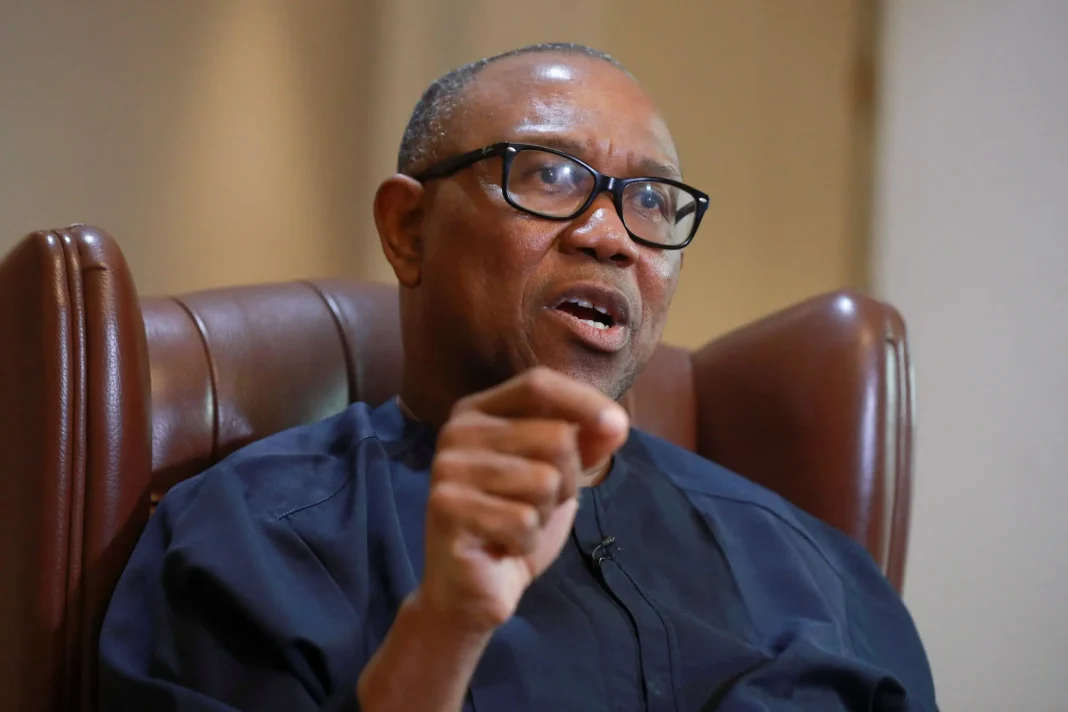
Activist Aisha Yesufu has rejected the Nigeria Democratic Congress, NDC, senatorial primary for the FCT, alleging the process was rigged, manipulated, and lacked transparency.

In a statement Friday after the exercise, Yesufu said she did not withdraw or abandon the race but stayed till the end despite what she called a “flawed” process.


—“A predetermined outcome”—


Yesufu accused the party of abandoning its initial plan for direct primaries at LGA level. Instead, she said, NDC switched to a delegate system at a central venue with short-notice changes that caused confusion.

She claimed the result was never decided by delegates:

“What was billed as a primary was, in truth, a predetermined outcome dressed in procedural formalities. When the moment came, the contest was not decided by delegates in the open; it was affirmed in a closed room.”

She argued this undermined fairness, adding that official claims of a “free and fair” process did not match what happened on ground.


—No legal challenge, but new project—

Despite the allegations, Yesufu said she would not pursue legal action. “I ran to win, but when the process was subverted, I chose not to exhaust myself in a grievance process designed to wear people down,” she stated.

She said the experience gave her deeper insight into Nigeria’s political system: “That knowledge is worth more than any petition I could have filed.”

Yesufu, who joined NDC ahead of 2027, said her campaign was a “people-powered movement” built on grassroots mobilization in Abuja.

She admitted the party has internal flaws but insisted NDC remains a credible presidential alternative. She also announced a new initiative, “A Better Abuja 2031,” to stay active in FCT politics.

CONCLAVENG

The Shettima danger for Tinubu


By Farooq A. Kperogi

Sometime in January this year, a senior Lagos-Ibadan journalist called my attention to a news story in which Hannatu Musawa, President Tinubu’s Minister of Art, Culture, Tourism and Creative Economy, said with earnest certainty that dropping Vice President Kashim Shettima as Tinubu’s running mate would gravely imperil Tinubu’s reelection chances. He wanted to know what I thought about it.


I promised I would share my thoughts in a column the following week, but more urgent matters that needed my discursive interventions came up, and I didn’t get round to doing it. In the intervening months, several other people have echoed Musawa’s sentiments. As maneuvers for the 2027 election intensify, the question of Shettima’s place in Tinubu’s 2027 calculus keeps taking center stage.


To my knowledge, no one has sufficiently articulated the socio-historical,  political, strategic, ethnographic and even emotive reasons for the choice of Shettima as Tinubu’s running mate, or why his replacement, especially with a northern Christian as is being rumored, would convulse the foundations of the Tinubu presidency.


I have pointed out in many past columns that in Nigeria’s emotional cartography, there are five broad ethnographic cocoons, which I like to sometimes call emotional maps, that have evolved independently and have broadly shaped voting and other kinds of national behavior.


There is the Northern Muslim Bloc that largely transcends northern ethnic boundaries, the Yoruba Bloc that mostly papers over religious differences, the Northern Christian Bloc that collapses ethnic and subregional borders, the Igbo Bloc that is self-explanatorily ethnically and religiously homogenous and the Southern Minority Bloc that encompasses a multiplicity of ethnicities that are neither Yoruba nor Igbo.


This emotional cartography isn’t intended to be a simplistic, self-sufficient and unnuanced mapping of diverse people into unproblematized boxes where there are no internal differences. It is intended only to show that, generically speaking, these broad collectivities tend to coalesce around the same affectional bonds in relation to national issues.


In the politics of emotional affiliation to, or connection with, the center of power, feelings of group representation draw on these maps. For example, the appointment of General Christopher Gwabin Musa first as Chief of Defense Staff and later as Minister of Defense has been a source of recognizable representational nourishment for most northern Christians across ethnic and subregional divides, even though Musa is from Kaduna, which is supposed to be in the Northwest.


So, based on my mapping of the emotional contours of Nigeria’s ethnographic landscape, the Tinubu-Shettima ticket actually is not, strictly speaking, the Muslim-Muslim ticket people say or think it is. It is, in reality, a Yoruba-Muslim ticket. Here’s why.


Tinubu, like most Yoruba people, defines himself first and foremost as a Yoruba person before he is anything else. That was why, in his 2022 Abeokuta speech, he prefaced “Emi lo kan” with “Yoruba lo kan.” In other words, he derived the social, political and emotional basis for the legitimacy of his presidential aspiration from his Yoruba identity.


Islam is incidental, even expendable, to Tinubu’s identity. This was dramatized this week when the presidency had a need to debunk a bizarre rumor that Tinubu had converted to Christianity.


Shettima, on the other hand, can’t afford to define himself as Kanuri in the context of national politics. On the national stage, he is the symbolic representation of collective northern Muslims, although this does not erase his Kanuri and cosmopolitical credentials. In other words, Shettima is primarily a northern Muslim who provides the symbolic conduit through which Muslims in the North identify with the administration he is a part of.


Some, maybe even most, northern Muslims may disagree with the administration and even with Shettima himself. But that’s in the region of the head. In their hearts, however, it’s a different matter. It’s like having a mother you disagree with but whose presence you cherish nonetheless because her absence would create a crushing emptiness in you.


In fact, no northerner, whether Christian or Muslim, can stake his or her national political aspiration on an ethnic platform. They would usually choose a pan-northern platform or a religious justification for their aspirations, depending on the context.


It needs to be pointed out that I am not making any moral judgments here. Tinubu’s appeal to Yoruba nationalism is not inferior to northern politicians’ appeals to regional or religious solidarity. The differences merely reflect how differently we have evolved politically and emotionally.


Now, replacing Shettima with a northern Christian running mate is fair in view of what appears to be the systematic exclusion of northern Christians at the top since the return of democracy in 1999. However, even at the risk of being misunderstood, it needs to be pointed out that such a move would signal two things.


First, contrary to what many people are inclined to assume, it won’t be a Muslim-Christian ticket. It would be a Yoruba-Christian ticket. As I pointed out earlier, Tinubu’s self- and collective identity-definition is primarily Yoruba, and it’s the basis for his claim to the presidency. Until fairly recently, he didn’t even publicly identify with Islam and still stumbles when he tries to perform his secondary Muslim identity.


Second, Tinubu has to contend with the altered demographic calculations for the 2027 election that the choice of a northern Christian running mate would present. In the 2023 election, most northern Christians voted for Peter Obi, with Benue State being the notable exception. In Benue, Tinubu rode on the coattails of the then wildly popular APC governorship candidate Rev. Fr. Hyacinth Iormem Alia to victory.


Since 63.6 percent of Tinubu’s 8,805,420 votes in 2023 came from the North, it is safe to assume that most of those votes came from the Northern Muslim Bloc. To get rid of the ethnographic, emotional symbol of such a bloc in your quest for a second term, you have to be able to compensate for the electoral loss such a move would most certainly provoke. That seems like a tall order.


True, northern Christians seem to have warmed up to the Tinubu administration, perhaps because the anxieties that activated their hostility haven’t materialized. In fact, in May 2025, as Tinubu prepared to travel to Rome for the inauguration of Pope Leo XIV, the presidency reportedly supplied THISDAY with data that showed 62 percent of Tinubu’s appointees were Christians.


Bayo Onanuga later echoed the same claim at the Vatican when he said he had read that 62 percent of the president’s cabinet members were Christians.


Tinubu’s handlers can point not only to presidency-supplied claims about Christian appointments but also to a trail of public statements by some northern Christian bodies and clerics who said, in varying degrees of intensity, that his appointments had softened, answered or “allayed” fears over the Muslim-Muslim ticket.


For example, Rev. Kelvin Pwajok of the Northern Christian Forum thanked Tinubu in September 2023 for appointing northern Christians such as George Akume and Christopher Musa to strategic positions. Dominic Alancha of All Christian Youths in Northern Nigeria said the group’s earlier reservations had been eased by Tinubu’s appointments. Rev. Yakubu Pam of Northern CAN said in January 2025 that Tinubu had shown reasonable inclusiveness.


Archbishop John Praise Daniel of the Northern Christian Religious Leaders’ Assembly said in October 2025 that Christians did not feel sidelined and that Tinubu’s appointments had allayed many fears. Rev. Amos Mohzo of COCIN also thanked Tinubu for supporting northern Christians through appointments such as Akume as SGF and Nentawe Yilwatda as APC national chairman. In May 2026, the Christian Northern Nigeria Progressive Forum backed Tinubu’s re-election and framed its support around inclusion, fairness and national stability.


By contrast, Muslim groups and clerics have complained that the Muslim-Muslim ticket has not translated into commensurate representation for Muslims in Tinubu’s appointments.


For example, the Supreme Council for Shari’ah in Nigeria said Muslims remained politically marginalized despite their support for the ticket, while Professor Mansur Ibrahim Sokoto argued that Tinubu won Muslim votes but had since sidelined Muslims and the North.


Yoruba Muslim bodies have made a more specific regional case. MURIC has repeatedly alleged that South-West Muslims have been shortchanged. It even described some appointments as “Christian-Christian” under a Muslim-Muslim presidency. The Concerned Yoruba Muslim Scholars in Nigeria said Yoruba Muslims had expected Tinubu’s presidency to redress their long-standing marginalization but have instead faced deeper exclusion. MUSWEN also said South-West Muslims are underrepresented in federal appointments relative to their demographic strength and intellectual weight.


In other words, dropping Shettima in favor of a Christian running mate would effectively create a perceptual “Christian-Christian” ticket in the North. Northern politicians like Musawa who have an intimate familiarity with the sociology of northern politics know that this would sound the death knell of Tinubu’s second term bid, especially in light of Peter Obi’s dominance in the Southeast, which will deprive Tinubu of bloc votes from the South.


This choice comes with an even more poignant existential implication. Historically, in moments of  political trauma, northern elites tend to instrumentalize religion to rouse the masses to popular action. Should Tinubu somehow manage to “win” without a northern Muslim running mate, he could have an unprecedentedly convulsive Nigeria to preside over.


Farooq Kperogi, author and Professor of Journalism @KennesawState University, is also a columnist with Nigerian Tribune

NUT threatens nationwide school shutdown over insecurity


The Nigeria Union of Teachers (NUT) has warned it may shut down schools across the country if further attacks occur, following a surge in kidnappings and killings involving teachers and pupils.


Recent incidents in Oyo, Borno, and Kebbi states have heightened concerns over safety in schools.


In Oyo, gunmen reportedly attacked three schools—Baptist Nursery and Primary School, Community Grammar School, and LA Primary School—abducting about 39 pupils and seven teachers. Similarly, more than 50 pupils of Mussa Central Primary School in Askira-Uba Local Government Area of Borno were recently kidnapped.


NUT President, Titus Amba, said the union could no longer tolerate the growing insecurity, stressing that teachers may be directed to stay away from classrooms if their safety is not guaranteed.


Speaking on the situation, Amba lamented that banditry, kidnappings, and killings have persisted despite the introduction of the Safe School Initiative, which was designed to protect educational institutions.


“As far as we are concerned, the situation is getting worse, especially at the basic education level where attacks and abductions have become frequent,” he said.


He noted that while the Safe School Initiative was a commendable step, it has not effectively secured schools, citing recent attacks in Borno, Kebbi, and Oyo as evidence.


Amba warned that any further attack could trigger a nationwide shutdown of basic education schools, insisting that teachers would not continue to work under life-threatening conditions.


“If this happens again in any state, we will have no option but to shut down the entire basic education system. If teachers are not safe, then the system has failed,” he said.


He also recounted incidents where teachers were killed or abducted, including reports from Kebbi and Oyo where victims were attacked in violent circumstances.


According to him, some abducted teachers and pupils remain in captivity, prompting the union to direct teachers in high-risk areas, particularly in Oyo State, to stay away from school for their safety.


Amba called on government, communities, and stakeholders to take urgent action to protect schools, emphasizing that safeguarding lives must be a collective responsibility.


“Teachers, students, and pupils must be protected. No parent should send a child to school and fear they won’t return,” he added, urging Nigerians to demand stronger security measures nationwide.

Conclaveng.

Politicians are the Goliaths in our polity; Nigeria must find its David -Peter Obi


Peter Obi, the front-runner for the 2027 presidential election in Nigeria has identified politicians as the Goliath obstructing progress in Nigeria and emphasised that Nigeria needs a David to rescue the nation.

At a Youth Conference in Abuja, organised by Rev Fr John Chinenye Oluoma of the Abuja Archdiocese, Obi clearly stated that Nigeria must raise a David capable of defeating the Goliath within its polity to forge ahead.

Said Obi, “Today, at the David and Goliath conference in Abuja, aimed at empowering Nigerian youths to confront their challenges, I made it clear that the Goliaths in Nigeria’s political landscape are the politicians who divert public funds for personal gain. I told the youths that these politicians are the primary Goliaths because they refuse to prioritise the country’s interests.

“All critical sectors—security, power, healthcare, and education—are suffering because of the leaders’ corrupt tendencies.

“The youth delegates at the conference posed tough questions about overcoming the Goliath in their lives as Nigerians,” he said.

Giving further details, the former Governor of Anambra State said: “From their questions, I identified the key areas where Nigeria is failing: security, education, health, and unemployment.

“I challenged the youth to be realistic in their pursuits—live within their means and reject artificial lifestyles—as a way to conquer the Goliath in their lives, he said. Sunrisereporters.


Not yet time to celebrate – Atiku speaks on emergence as ADC presidential candidate


African Democratic Congress, ADC, presidential candidate, Atiku Abubakar has declared that it is not yet time to celebrate.

Reacting to his emergence as the ADC flagbearer in the 2027 presidential election, Atiku urged all the party’s contestants to work together in pulling Nigeria out of the grip of corruption, incompetence and what he described as the polarizing government of the All Progressives Congress, APC.


Posting on X, the former Vice President wrote: “I must state at this juncture that this is not the time to celebrate. No one was defeated because we are one party and we all need to recognise the fierce urgency of the moment.


“Therefore, we have to unite, as we pledged before this process, to work to pull our country and our people out of the destructive grip of a corrupt, incompetent and polarising APC government.”

Atiku commended the ADC’s primary election committee for the peaceful outcome of the primaries across the country.

He said: “I thank the primary elections Committee for organising peaceful, free, fair and transparent primaries.


“I thank the various leadership organs of our party, the various stakeholders, and volunteers for their hard work and dedication and all our party members and supporters for their efforts, patience and conduct during the process.”

The former Vice president stressed that hard work is about to begin with the conclusion of the primaries.


“With the primaries behind us, the real hard work is about to begin. We have to prepare to campaign hard to win the next general elections in order to begin the difficult process of rescuing our country and its long-suffering people from this government,” he added. Newspot.

Biafra Day: MASSOB declares sit at home 

Movement for the Actualisation of the Sovereign State of Biafra (MASSOB) has announced a compulsory sit-at-home exercise across the South-East and parts of the South-South on Saturday, May 30, 2026, to mark Biafra Day.

The Group also directed churches in the affected regions to hold special memorial and thanksgiving services on Sunday, May 31, 2026.
In a statement released by MASSOB’s National Director of Information, Edeson Samuel, the activities are intended to commemorate the 59th anniversary of the declaration of Biafra by the late General Chukwuemeka Odumegwu Ojukwu on May 30, 1967.
According to the Group, the church services will honour millions of people who died during the Nigerian Civil War between 1967 and 1970.
The group described the anniversary as a significant moment in its continued pursuit of self-determination. MASSOB said the sit-at-home order represents a day of remembrance, reflection, and peaceful civil disobedience.
The statement noted that markets, schools, banks, motor parks, and other public and private business establishments are expected to remain closed from 6:00 a.m. to 4:00 p.m. on May 30.
Samuel said the shutdown is meant to show respect and appreciation for those who sacrificed their lives during the war.
MASSOB however warned its members against organizing public rallies, marches, or street demonstrations during the commemoration, citing concerns over possible clashes with security agencies.
The Group also used the occasion to renew its demand for the unconditional release of Mazi Nnamdi Kanu, leader of the Indigenous People of Biafra (IPOB).
MASSOB further noted that security agencies, including the Nigerian Army, Police, DSS, and Civil Defence Corps, would likely be heavily deployed across the region during the anniversary activities but insisted that intimidation, arrests, or State actions would not weaken the resolve of people advocating for self-determination. Authority.

Enforce ban on roaming cattle in Abuja, HURIWA tells Wike

The Human Rights Writers Association of Nigeria (HURIWA) has urged the Minister of the Federal Capital Territory, Nyesom Wike, to enforce ban on roaming cattle on major roads and public spaces within the nation’s capital, Abuja.
HURIWA made the appeal in a statement signed by its National Coordinator, Comrade Emmanuel Onwubiko, expressing concern over the increasing presence of cattle on highways and busy traffic corridors in parts of the Federal Capital Territory, warning that the development poses safety and environmental risks.
It said the nation’s capital, should reflect orderliness, proper urban management and strict compliance with regulations guiding public safety and sanitation.
The association also raised concerns over insecurity in the FCT, especially incidents linked to suspected “one-chance” robbery syndicates, urging security agencies to intensify intelligence gathering and coordinated operations to safeguard residents and commuters.
According to the statement, residents of the capital city deserve improved security and stronger law enforcement measures to curb criminal activities.
HURIWA therefore called on the Inspector-General of Police and the Department of State Services, DSS, to collaborate closely with other security agencies in dismantling criminal networks operating within Abuja and its environs.
The association further urged the FCT Administration to ensure strict implementation of laws prohibiting open grazing and obstruction of highways within the city.
It also called for immediate removal of cattle obstructing public roads and highways, improved synergy among security agencies in tackling criminality, and greater transparency regarding the arrest and prosecution of suspects linked to “one-chance” operations.

Senate leaders call for prayer, unity, and sacrifice as Muslims mark Eid-El-Kabir

Senate leaders have urged Nigerians to use the Eid-El-Kabir celebration to pray for peace, security, and national unity, while reflecting on the values of sacrifice and tolerance exemplified by Prophet Ibrahim.
President of the Senate, Godswill Akpabio, in a message through his Special Adviser on Media and Publicity, Hon. Eseme Eyiboh, felicitated President Bola Ahmed Tinubu, Vice President Kashim Shettima, and Muslims across Nigeria and globally. He described the festival as a reminder of “devotion, selflessness, and submission to divine will,” values he said Nigeria urgently needs.
Akpabio called on citizens to pray for troops on the frontlines, farmers returning to their fields, and for unity to prevail over division. He added that the Renewed Hope Agenda, backed by the National Assembly, rests on the principle that meaningful progress often requires collective sacrifice.
Deputy Senate President Barau I. Jibrin, in a separate Sallah message signed by his Special Adviser Malam Ismail Mudashir, congratulated Muslims and Nigerian pilgrims in Saudi Arabia. He urged sustained prayers for peace, stability, and prosperity, and called on Nigerians to support President Tinubu’s efforts to address the country’s challenges.
Leader of the Senate, Senator Opeyemi Bamidele, warned political actors against inciting violence ahead of the 2027 elections, citing Armed Conflict Location and Event Data that recorded 1,639 deaths from electoral violence between 1999 and 2023. He said no Nigerian should lose their life because of political ambitions and urged adherence to the rule of law during campaigns.
Bamidele also called for prayers for children, parents, and teachers still held in captivity by bandits, particularly the 87 victims recently kidnapped in Borno and Oyo states. He reiterated the National Assembly’s commitment to strengthening security and social protection systems to safeguard lives and property.
Former Senate President Ahmad Ibrahim Lawan said Eid-El-Kabir should inspire a national rebirth anchored on personal sacrifice, unity, and empathy. He challenged leaders to place national interest above personal gain and urged Nigerians to remain steadfast in prayers for President Tinubu and other leaders.
Senator Solomon Adeola, Chairman of the Senate Committee on Appropriations and APC governorship candidate for Ogun State in 2027, asked Muslims to pray for peace and the consolidation of gains under the Renewed Hope Agenda. He said adherence to Islamic teachings on sacrifice, love, and peaceful coexistence would help Nigeria overcome systemic challenges.
All the leaders concluded their messages with wishes for a peaceful and memorable Eid, urging citizens to extend support to the less privileged and to recommit to building a united and prosperous Nigeria.

Troops kill two ISWAP fighters in ambush operation in Yobe State

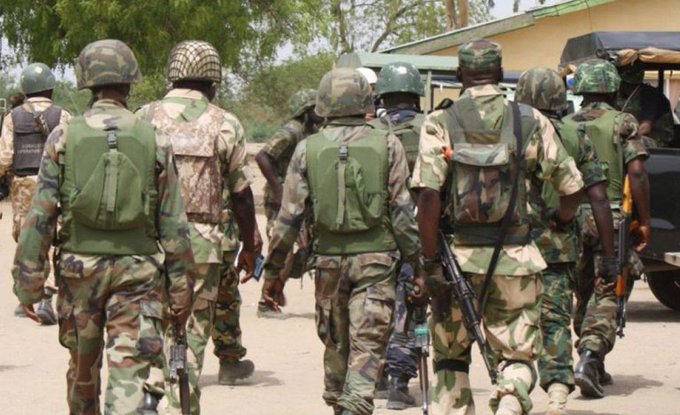
Troops of the 27 Task Force Brigade Garrison, in collaboration with the Civilian Joint Task Force (CJTF) and local hunters, have neutralised two suspected Boko Haram/ISWAP terrorists in an ambush operation in Gujba Local Government Area of Yobe State.
The operation was carried out under Operation HADIN KAI as part of ongoing counterterrorism efforts in the North-East.
According to a Special Situation Report from Headquarters Sector 2, Operation HADIN KAI, the ambush followed credible intelligence on the movement of suspected terrorists around Kasaicia village along the Damaturu–Buni Yadi road.
Military sources said the troops laid an ambush at about 4:00 p.m. on May 27 and successfully engaged the terrorists as they attempted to move through the area.
Two insurgents were killed in the encounter, while weapons and ammunition were recovered from the scene, including two AK-47 rifles and empty magazines.
Security officials confirmed that the situation in the area remains under control, with troops maintaining heightened surveillance and operational readiness.
Authorities say the continued operations are part of efforts to deny terrorist groups freedom of movement and disrupt their activities across Yobe and neighbouring states.

COAS tasks troops to intensify offensive against criminal elements in North Central

The Chief of Army Staff, , has charged troops of Joint Task Force North Central, Operation Savannah Shield, to sustain and intensify ongoing operations aimed at decisively neutralising kidnappers, bandits, and other criminal elements operating in the region.
He gave the charge on Thursday, 28 May 2026, during an operational visit to the Headquarters of the Joint Task Force in Ilorin, Kwara State, where he addressed personnel at Sobi Barracks.
In a statement issued by the Acting Director of Army Public Relations, , the Army said the visit underscored renewed leadership commitment to strengthening operational effectiveness and morale of troops engaged in internal security operations.
The COAS reiterated that the Nigerian Army remains fully committed to its constitutional responsibility of safeguarding lives and property, noting that ongoing operations have continued to degrade the activities of criminal groups across Kwara, Niger, and surrounding states.
He further assured that additional combat enablers and logistical support would be deployed to enhance clearance operations and dismantle criminal hideouts within the Joint Operations Area.
Earlier, the Theatre Commander of Operation Savannah Shield, , commended the COAS for his visit and continued support, describing it as a major boost to ongoing counter-insurgency efforts. He assured that troops would remain committed, disciplined, and focused on restoring lasting peace and stability in the region.
The Army Chief also emphasized troop welfare, stating that improved conditions for personnel and their families remain central to sustaining morale, discipline, and operational effectiveness across all theatres of operation.