Obidient/Kwankwasiyya courtship shakes table


By Ike Abonyi

“We can all get more together than we can apart. And this is the way we gain power.” – Martin Luther King Jr

Last Sunday, a seismic political event in Kano jolted Nigeria’s political landscape, injecting much-needed energy into a waning political climate. As opposition governors and parliamentarians shamelessly abandoned their constituents in search of the ruling party’s rigging apparatus, many Nigerians teetered on the brink of despair, ready to abandon politics altogether. The people’s mood mirrored that of the Apostles of Jesus Christ at His crucifixion—disheartened and contemplating a retreat to familiar ground. Peter, the head of the group, declared his intention to fish again, reflecting the desperation felt by many Nigerians in opposition as the country approachesthe 202 elections7.
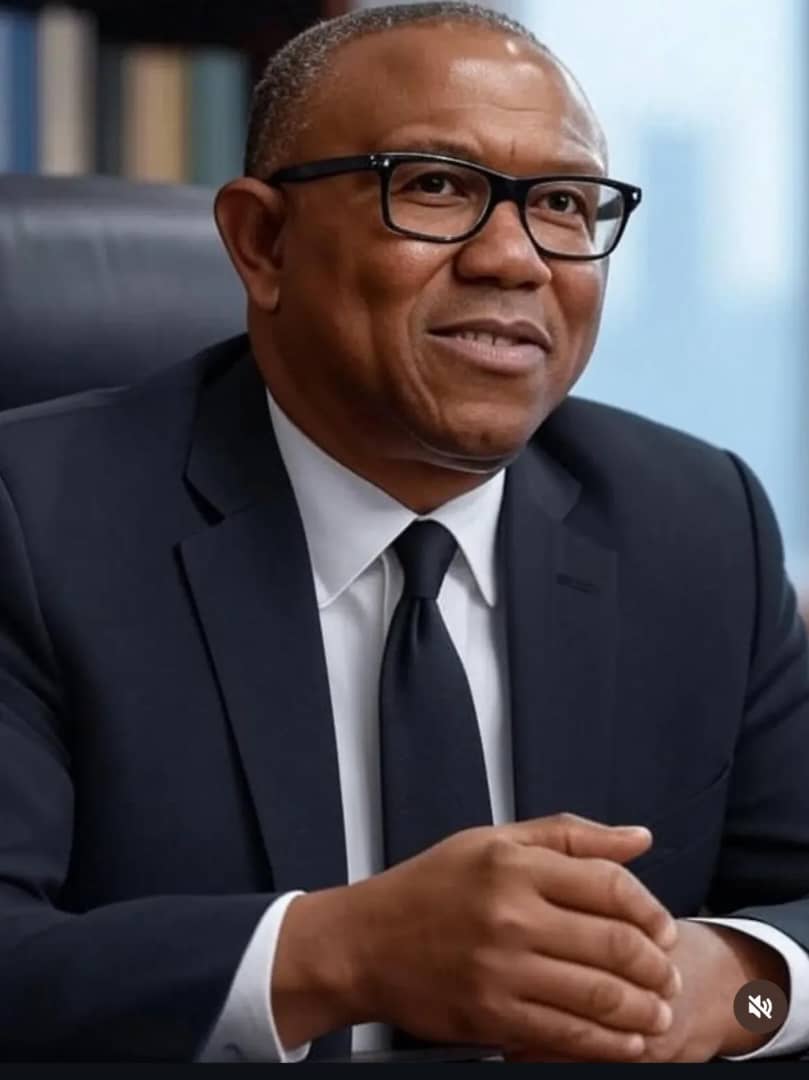
The ADC Coalition’s indecision regarding the 2027 elections further fueled disappointment, leading many to lose hope. Just as despair loomed large, a significant meeting took place in Kano last Sunday that rattled the status quo. The gathering of leading opposition figures—Peter Obi, the 2023 Labour Party candidate, and Rabiu Kwankwaso, former Governor of Kano and 2023 Presidential candidate of the NNPP—was initially viewed as a solemn religious solidarity visit. However, it transformed into a revitalising event in Nigeria’s political arena.
Peter Obi and Rabiu Kwankwaso are not just political figures; they are at the helm of Nigeria’s two most dynamic political movements—Obidient and Kwankwasiyya. The excitement ignited by this meeting resonated across the nation, sending shockwaves through the ruling party’s ranks and revealing the potential of this burgeoning alliance.
This groundbreaking Sunday meeting reignited the “romance” between the Obidient and Kwankwasiyya movements. It “shakes the table” because it signifies a possible consolidation of Nigeria’s most disruptive political forces. The prospect of this alliance is provoking considerable anxiety within the ruling APC for several strategic reasons: it paves the way for a much-needed North-South connection. In the 2023 elections, both movements faced criticism for their regional focus—Obi dominated the South and parts of the North-Central, while Kwankwaso confidently controlled Kano and the North-West. A merger, now signalled by this pivotal meeting, effectively bridges the Niger, merging the youth-led urban activism of the Obidients with the disciplined grassroots machinery of the Kwankwasiyya. They are now adhering to the African proverb that says, “If you want to go fast, go alone. If you want to go far, go together”
Political analysts assert that had these two forces united in 2023, the electoral landscape would have appeared drastically different. By 2026, amid the economic challenges gripping the nation, plus the deteriorating security situation in the country, a united opposition ticket is viewed as a “nightmare scenario” for the ruling APC. It solidifies the protest vote previously split between the Labour Party (LP) and the New Nigeria Peoples Party (NNPP). Meanwhile, the former Vice President Atiku Abubakar’s value has remained downplayed obviously despite his second position in 2023 because of the unfavourable political climate around him due to zoning. His insistence on proceeding with his ambition despite the glaring adverse arrangements is like working against the tide and has hindered coalition-building. Many political observers are even concerned about his disruptive role coming from an elder statesman. The body language in national politics today is such that any movement seeking to return power to the North in 2027 is seen as counterproductive.
In this context, the March 23, 2027, Kano meeting not only mitigated Atiku’s disruptive influence but also acted as a genuine catalyst for the opposition’s resurgence. Arguably, the “table-shaking” is intensified by the high-profile gatherings. Reports of Kwankwaso hosting Obi alongside key figures like Governor Seyi Makinde in Kano resonated throughout the political landscape because it was not mere socialising; it laid the groundwork for a potential 2027 “Mega Party” or coalition under a neutral platform like the ADC.
The resonant call of “Obi/Kwankwaso” from the jubilant Kwankwasiyya supporters has eliminated a significant hurdle related to leadership hierarchy between the two principals. By seemingly deferring to zoning, the Kwankwasiyya clearly indicated their willingness to embrace a joint ticket.
Sceptics may attempt to downplay the significance of the Kano meeting, questioning why it’s considered such a substantial event. However, the political atmosphere is charged with energy, and this alliance is shaking the table, and effectively undermining the ruling party’s dominance. The implications of this strategic partnership are impossible to ignore, heralding a new chapter in Nigerian politics.
If Obi and Kwankwaso can set aside their egos and build on the momentum from last Sunday’s courtship, they will forge a powerful electoral bloc that cuts across ethnic and religious divides—two traditional tools often exploited in Nigerian elections. An English business magnate and co-founder of Virgin Group, Richard Branson, emphasises the necessity of alliances, stating that, “they are essential to growth and provide resistance to bigger competition” and this applies in both business and politics.
Should the Peter Obi and Rabiu Kwankwaso alliance be successfully solidified, it will undoubtedly benefit the political landscape and echo Robert Jordan’s wisdom: “To fight the raven, you may make alliance with the serpent until the battle is done.”
Northern Nigeria has faced justified criticism from political analysts in this dispensation for squandering its numerical strength in pivotal political decisions. The Obi/Kwankwaso partnership represents a crucial shift, one that could enable the region to make a bold and pragmatic correction in its approach, especially in anticipation of the 2027 elections.
Nigerians facing serious challenges have every right to hold leaders accountable when they remain unresponsive. Whether leaders are merely confused or hesitant, they bear the responsibility for the repercussions of their inaction.
The geopolitical landscape of Northern Nigeria is uniquely positioned to rectify the country’s electoral failures, yet it has repeatedly missed this opportunity. The current discontent surrounding President Bola Ahmed Tinubu’s ascent underscores the dire consequences of failing to seize the moment.
A Northern-dominated national Assembly has passed three appropriations in 2024, 2025, and 2026 and seen all poorly implemented but kept mum, they passed the obnoxious tax law, the Electoral Act, sanctioned numerous loans that are unaccounted for all designed to undermine the North, and to cap it they passed the law excluding certificate falsifiers from aspiring to any position in the land. Haba! North, you have the wherewithal to avert these things but your legislators chose personal gains instead. This recurring selfishness displayed by the North especially in 2023 has thrust the nation into the prevailing political crisis. The rising support for Peter Obi, particularly in the North, may signal the beginning of the end for the political chaos that has plagued the country. God help us.

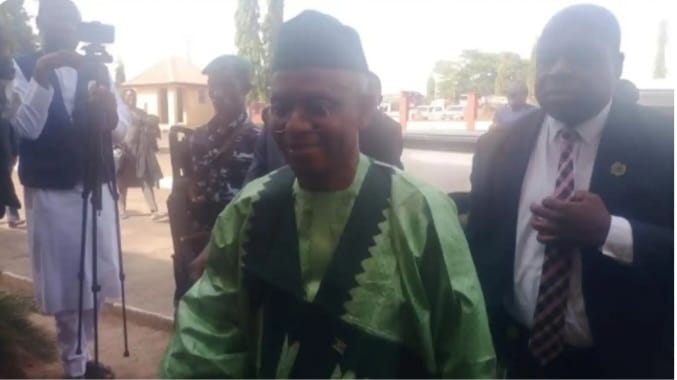
El-Rufai arrives Kaduna Court under heavy security over alleged corruption


Former Kaduna State Governor Nasir El-Rufai arrived at the Federal High Court in Kaduna under heavy security on Tuesday, March 24, 2026, as proceedings began in his corruption case.

Reports said operatives from multiple security agencies were deployed around the court, while journalists and members of the public faced tight access restrictions ahead of the hearing.

The arraignment follows confirmation by the Independent Corrupt Practices and Other Related Offences Commission (ICPC) that charges were filed on March 18, 2026. Available reports indicate that El-Rufai is facing allegations including abuse of office, fraud, conferring undue advantage, and related corruption-linked offences. Some reports also say he appeared alongside co-defendants as the trial formally opened.

The heavy security presence reflects the political sensitivity of the case. El-Rufai remains one of Nigeria’s most controversial and influential former governors, so his court appearance carries significance beyond the legal charges alone. It is being watched as a major test of anti-corruption enforcement, due process, and the willingness of institutions to prosecute politically exposed figures without fear or favour.

For now, the central questions are no longer whether he would appear, but how far the prosecution can go, what evidence will be presented, and whether this case will end in genuine accountability or become another long-running political courtroom drama. Starnews.

Iran rejects Trump’s ceasefire claim, denies talks with US

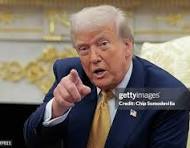
Iran on Monday rejected US President Donald Trump’s claim of a five-day ceasefire and ongoing negotiations, denying any talks with Washington and describing the move as a “retreat” under pressure.

The response from Tehran came within hours of Trump’s announcement that the United States would pause planned military strikes on Iranian energy infrastructure, citing “very good and productive” discussions between the two sides.

Iran’s Foreign Ministry категорically denied that any negotiations were underway, accusing Washington of attempting to “buy time” while regional developments unfold independently of US involvement.

Adding to the sharp rebuttal, Iranian state-linked media and voices associated with the Islamic Revolutionary Guard Corps (IRGC) asserted that no talks had taken place, claiming that the US decision to halt strikes reflected fears of retaliation rather than diplomatic progress.

Ebrahim Rezaei, spokesperson for Iran’s National Security and Foreign Policy Commission, struck a defiant tone, saying: “The battle continues… and another defeat for the devil. Trump and the United States have once again been defeated.”

The remarks underline Tehran’s attempt to frame the development as a strategic victory, portraying US restraint as the outcome of pressure rather than negotiation.

Earlier, Trump had announced a five-day pause on military strikes targeting Iranian power plants and energy infrastructure, linking the decision to ongoing diplomatic engagement. He said the move was conditional and intended to create space for a broader resolution of hostilities, adding that further steps would depend on the progress of talks.

However, the starkly conflicting narratives from Washington and Tehran have heightened uncertainty over the situation. While the US has presented the pause as a diplomatic opening, Iran has rejected the premise of negotiations altogether, signalling that mistrust between the two sides remains deep.

The divergence comes at a time when tensions in West Asia are already impacting global energy markets and supply chains. The absence of any acknowledged dialogue raises concerns over the durability of the pause and the risk of renewed escalation once the five-day period ends.

For now, the situation remains fluid, with the coming days expected to be critical in determining whether tensions ease or intensify further. Newspot.

ICPC to arraign El-Rufai Tuesday

The Independent Corrupt Practices and Other Related Offences Commission (ICPC) has announced that it will arraign former Governor Nasir El-Rufa’i in Kaduna on Tuesday.

El-Rufai has been in detention since he honoured the invitation of the Economic and Financial Crimes Commission (EFCC), on February 16, 2026.

The EFCC had grilled him for 48 hours before the ICPC moved him into its custody.

El-Rufai’s prolonged detention had sparked outrage, with many groups and individuals calling on the agency to charge him to court or release him.

In a statement on Monday, John Okor Odey, ICPC spokesman, said El-Rufai would be arraigned at a Federal High Court in Kaduna, on Tuesday.

“The suit with number FHC/KD/73/2026 has charges ranging from conversion of and possession of public property, to money laundering.

“Similarly, another charge, number KDH/KAD/ICPC/01/26, against Malam Nasir El-Rufa’i and one Amadu Sule (LEDA), has also been filed before a Kaduna State High Court in the Kaduna Judicial Division.

“The charges in the State High Court case range from abuse of office, fraud, and intent to commit fraud to conferring undue advantage, among others.

“Both charges were filed by the ICPC on the 18th of March, 2026.

“The date of arraignment in the State High Court will be communicated at the appropriate time as determined by the Court.”

The ICPC said El-Rufa’i has been duly served.

End

Obi on El Rufai: A new political temperament

Obi on El Rufai: A New Political Temperament


By Sani J. Suleiman
Peter Obi’s entry into Nigeria’s political landscape is a breath of fresh air in a system that often demonises those with differing views. His recent publicly stated advocacy for the release of Nasir El-Rufai has ignited significant discussions across Nigerian politics, especially considering their intense rivalry before and during the 2023 elections. In the traditional Nigerian political playbook, Obi could have easily reminisced about the pivotal role El-Rufai played in thwarting his aspirations Despite Obi being the people’s choice, El Rufai went for party loyalty and supported Bola Tinubu, who has now become his traducer.
However, what we are witnessing is not merely nostalgia; it is a strategic shift reflecting Obi’s commitment to a “politics of principles.” This shift serves as a foundation for a new political coalition—the African Democratic Congress (ADC)—as they gear up for the 2027 polls.
On March 9, 2026, Obi released a powerful statement on X, vehemently condemning the continued detention of El-Rufai and former Attorney General Abubakar Malami. His argument rests on three essential pillars: fairness, the illegitimacy of the government’s “Fishing Expeditions,” and the undue “repeated transfers” of El-Rufai between the EFCC, ICPC, and DSS. Obi called out this approach as a “desperate search for any charge that might stick,” challenging the integrity of the investigations. While he supports the fight against corruption, he insists that it must begin with those currently in power, emphasising that selective enforcement undermines the broader fight against corruption. He framed El-Rufai’s detention as “political persecution disguised as criminal prosecution.”
By defending a man who once dismissed him as a “tribal candidate” and a “Nollywood actor,” Obi is establishing himself as a leader who prioritises constitutional processes over personal grievances, elevating the rule of law above political grudges. As a Northerner who once admired El-Rufai until the latter joined with Tinubu in 2022, I find Obi’s principled stance on El-Rufai’s detention to be a monumental moment for our politics and for the ADC Coalition.
Both Obi and El-Rufai have recently united under the ADC banner, and Obi’s defence of El-Rufai is a savvy move to fortify this coalition. It sends a clear signal to northern power brokers that he is a fair partner, capable of putting aside past disagreements. I stand firmly with Obi’s supporters (Obidients) who interpret this act of magnanimity as evidence of his “superior temperament.” In a civilised society, detractors are entitled to fair treatment and the rule of law.
Yet, some critics may dismiss this “spirit of fairness” as merely a “marriage of convenience” with a former adversary. They are mistaken. It is high time for the North to cast aside its prejudices against Igbos and give Obi a chance. He has a proven track record that can instil confidence, especially given his pragmatic vision that has the potential to transform the North. I am happy that a formidable Northern mobilizer like Rabiu Kwankwaso is trying to identify with this Obi project. Imagine how electrifying it would be to have a political movement like the Obidient and Kwankwansiyya groups on one platform.
The time has come for the North to confront the escalating poverty in our region—a situation that is primed to erupt into crisis. We must acknowledge that no one will escape the fallout when that happens. Let’s act decisively for the collective good.
Suleiman wrote from Minna, Niger State.