Joint DSS-Army team foil planned attacks, kidnap by ESN in S/Nigeria, recover high-calibre arms


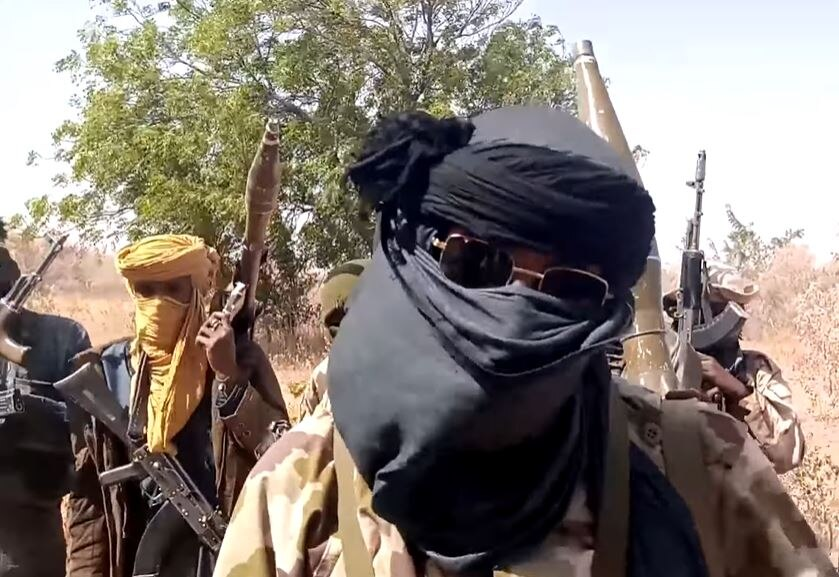
The Department of State Services (DSS), backed by troops of the 82 Division of the Nigerian Army, on Wednesday foiled plans by members of the outlawed Eastern Security Network (ESN) to attack several security checkpoints, kidnap women, students and children across the Southeast States.

A security source disclosed that, acting on intelligence acquired by the DSS, two ESN field commanders coordinating the planned attacks were apprehended on Monday in Garki, Enugu State.


The source further revealed that, based on the leads supplied by the nabbed ESN commanders, DSS sought the backing of troops from 82 Division, and executed a covert operation.


The operation led to the raids by DSS officers and soldiers on Tuesday and Wednesday on an ESN armoury in the Agbani axis of Enugu State.


The raids, disclosed the source, led to the recovery of a cache of high-calibre arms including a rocket launcher, two RPG (rocket propelled grenade) warheads, three RPG chargers, 11 AK-47 rifles, 18 AK-47 magazines, 1,071 rounds of 7.62mm special ammunition, two handheld grenades, one teargas gun, a baton and two teargas canisters.


The raids also led to the recovery of one smoke grenade launcher, two teargas canisters, 10 NYSC trousers, eight NYSC T-shirts and four NYSC lanyards. The source disclosed that intelligence revealed that the ESN members were to have used the NYSC uniforms as a cover to launch the attacks.


Intelligence gathered from the arrested ESN field commanders, according to another source, revealed that members of the terrorist organization were to have launched massive attacks across the Southeast States, kidnap women, students and children, spread fear and create the impression that the region has been overtaken by insecurity.


The Enugu recoveries came barely a week after DSS operatives arrested five suspected arms couriers linked to the gunmen who abducted students and staff of St. Mary’s Catholic School in Papiri Village, Niger State, on November 21, 2025.


The suspects, including two Nigeriens, were nabbed in coordinated operations across Kaduna, Niger and Kebbi states. Recovered from the men were 15 AK 103 rifles, 15 magazines and 1,434 rounds of 7.62 mm live ammunition.


The outlawed group has been responsible for series of kidnappings and attacks on security operatives in the Southeast, declared the source.


The raids on ESN armoury in Enugu State came shortly after a recent arrest by the DSS of several suspected members of the outlawed organization in the State. Globalupfront.

Bandits kill vice principal, six-year-old, one other in Kogi state


Bandits have killed a Vice Principal, a 6-year-old child, and another person when they invaded Government Secondary School, Iluke Bunu in Kabba/Bunu Local Government Area of Kogi State

The attack was said to have occurred at about 10:00 a.m. on Wednesday and threw the community into mourning and heightened concerns over security in the area.

The Kogi State Police Command Public Relations Officer Afusat Saliu confirmed the incident in a statement, explaining that a large number of armed bandits, operating on about 40 motorcycles, invaded the school with the suspected intention of abducting students and other residents.

Penpushing further reports that Saliu added that the Divisional Police Officer of Kabba ‘A’ Division immediately mobilised a joint security response after receiving distress calls, deploying personnel from the police division, the Police Mobile Force, and tactical teams.


The police spokesperson added that military personnel and local vigilante groups already stationed in the area also joined the operation, explaining that preliminary findings indicated that there is presently no conclusive evidence of a successful mass abduction of students or other residents.


“The combined security operatives engaged the hoodlums in a fierce gun duel, forcing the criminals to flee into the surrounding bush. Preliminary findings indicate that there is presently no conclusive evidence of a successful mass abduction of students or other residents’, she said.


According to the statement assessments are continuing to ascertain the full circumstances surrounding the incident, and equally confirmed that three persons were killed during the attack.


“However, investigations and ongoing assessments are continuing to ascertain the full circumstances surrounding the incident, three persons were killed during the attack. They include Mr Ganiyu Anifowose, the Vice Principal of UBE Secondary/Primary School, Iluke; Mr Sunday Jacob Alhassan, aged 70 years; and Sunday Ayele, aged six years.”


The statement said one of the attackers was neutralised during the exchange of gunfire, while a member of the joint security team sustained gunshot injuries and is currently receiving treatment.


The Commissioner of Police has ordered sustained bush-combing operations and confidence-building patrols in the affected area. According to the Command, joint security operatives are still conducting intensive operations to apprehend fleeing suspects and prevent further attacks.


‘Members of the public were urged to remain calm and assist security agencies with credible information. Further developments will be communicated as investigations and operations progress,” the statement added. Penpushing.

Atiku calls for declaration of emergency on security


*Says attacks on schools may cripple education, development


The presidential candidate of the African Democratic Congress (ADC) and former Vice President of Nigeria, Atiku Abubakar has decried the worsening state of insecurity in Nigeria, expressing concern that the terrorists and bandits attacks are now targeted at not only wasting precious human lives, but crippling the country’s  education.


Atiku raised the concern on Wednesday following the latest attack on Government Secondary School, Iluke Bunu, Kabba-Bunu Local Government Area of Kogi State in which three persons, including the Vice Principal of the school, and two others were killed while several students   were abducted.


Recall that a total of not less than 90 school children were on May 15 abducted in Oriire, Oyo State and Mussa, Borno State and the principal in the Oriire school beheaded.


The PDP presidential candidate in the 2027 election is worried that there is a pattern in these attacks aimed at crippling our education sector and consequently stalling our development strides.


The former Vice President therefore, calls for the declaration of emergency on security in Nigeria. He, however, noted that the envisaged state of emergency on security does not include the suspension of elected officials of states.


According to the Waziri Adamawa, the latest attack on a school in Kogi State is a direct threat to education and a colossal national embarrassment that demands urgent and drastic action.


“It is high time the Federal Government declared a statement of emergency to empower commanders with more freedom to act decisively and proactively with these monsters in the county,” Atiku said.


“I am not in any way calling for the removal of elected officials, but rather advocating for commanders to have freer hand to protect their battlefield decisions from political interference.”


The ADC Presidential candidate explained that “Nigeria is facing worsening insecurity that demands extraordinary measures, including state of emergency.


“Learning can only take place in a safe environment and terrorist attacks on schools are increasingly making our schools dangerous places. Worse still, the anxiety and trauma that follow terrorist attacks on schools will inevitably make the school environment unsafe for both students and teachers.


“Under no circumstances, should we allow terrorists or bandits to destroy our way of life and stop our children from going to school.”


The former Vice President added that “a terrorist attack on one one school is a threat to schools elsewhere across the country because of its domino-effect.”


As part of the drastic measures to address these security challenges, Atiku advocated the establishment of national guards made up of retired veterans to complement the efforts of our military and police that are clearly overstretched and under-manned.”


He also called for improved human intelligence on terrorist movements and greater community vigilance, explaining that “our communities have a great role to play in information sharing and eternal vigilance.”


Why has APC transformed into a leading opposition against one man – Peter Obi?


By Adim Williams

It is sad and unfortunate how things have turned out in our dear country under the All Progressives Congress, APC who assumed power rightly or wrongly since May, 2023. Every aspect of our national life has gone from bad to the worst since independence. From security, economy, politics and even social life, it is all a tale of woes. All they engage in are massive borrowing and unjustifiable expenditures resulting in hyperinflation, extreme hardship and hopelessness.


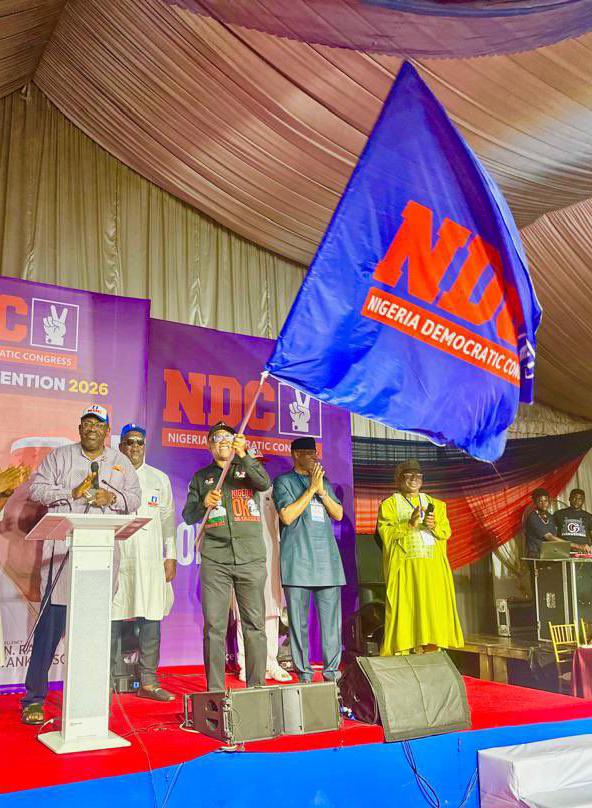
Now that the APC is seeking for re-election in the forth-coming 2027 elections, one would expect them to brandish and even gloat with their achievements for their campaigns, but we see none of that. Rather, they have engaged in a relentless but futile effort to de-market, diminish, tarnish and even stop Mr Peter Obi of the Nigeria Democratic Congress, NDC – the only candidate on whom Nigerians have implicit hope to salvage them from ravenous and unconscionable old brigade politicians.


If this treacherous onslaught was being done by APC alone, it might have been understandable since the party has nothing to campaign with. But ironically, other contending political parties have joined in the fray, including African Democratic Congress, ADC, Labour Party, LP etc. These parties have a deluge of internal problems and have so far not told Nigerians what they can do differently from the disastrous APC, yet they all have their poisonous arrows pointed at Peter Obi.


So the question people are asking daily is: why the obsession with Peter Obi by both the ruling party and other opposition parties? Well, the reasons are simple. First and foremost, Peter Obi under NDC is by far the front-runner presidential candidate for the 2027 presidential election. His personality, integrity, message, achievements and above all, his philosophy of governance have endeared him to vast majority of Nigerians long before now. Reason they voted massively for him in 2023 and will vote him even more massively in 2027.


Moreso, it is common knowledge that the 2023 election result was tampered, using a phantom glitch as escape. The authentic numbers got by Peter Obi scared his detractors. If he could get those figures with a small party and within just six months of campaign, imagine what will happen now that he has the time to prepare for 2027 election and with the collaboration of the most popular Northern politician alive; Senator Rabiu Kwankwaso as vice president, VP. Hence the apprehension, deflections and distractions!

When Politics pays the bills, truth becomes an enemy


By Paul Joseph

In many political systems, truth is expected to be the currency of accountability. In Nigeria, however, the reality often bends in the opposite direction: politics pays the bills, and truth gradually becomes an inconvenience—sometimes even an enemy.


This tension is not always loud or dramatic. It is subtle, structured, and deeply embedded in how power, patronage, and public communication interact. The result is a political environment where facts are frequently negotiable, and narratives are shaped less by evidence than by interest.


Across Nigeria’s political landscape, public office is widely seen not just as a platform for governance but as a gateway to influence, survival, and economic security. Once politics becomes the primary source of financial stability for individuals and their networks, the incentive to protect that system becomes stronger than the obligation to question it.


In such an environment, truth does not disappear—it is simply filtered. It is adjusted to fit political loyalty, delayed to suit strategic timing, or dismissed entirely when it threatens the flow of advantage. What emerges is a communication culture where contradiction is punished more consistently than wrongdoing.


This dynamic is most visible during moments of crisis: elections, security breakdowns, corruption allegations, or governance failures. Competing narratives emerge not necessarily to clarify reality, but to defend positions. The public is left navigating a maze of half-truths, selective disclosures, and emotionally charged counterclaims.


Politicians, like actors in any competitive system, respond to incentives. When reward is tied more to loyalty than accountability, silence becomes profitable. When criticism risks exclusion from political or financial networks, truth-telling becomes a costly act. Over time, this reshapes not only behaviour but expectations—what citizens demand and what leaders feel compelled to provide.


The media, civil society, and opposition voices often find themselves caught in this structure. Reporting or speaking truthfully is not always enough; it must also survive the pressure of political interpretation. Facts are sometimes reframed as attacks, investigations as conspiracies, and accountability as hostility. In this environment, truth competes not only with falsehood, but with influence.


Yet the deeper issue is not simply misinformation. It is the economic architecture of politics itself. When political office becomes one of the most reliable pathways to wealth redistribution among elite networks, the system begins to protect itself. It develops internal mechanisms of denial, justification, and selective outrage. Public interest becomes secondary to political survival.


This is why reforms alone often struggle to shift outcomes. Laws may exist, institutions may be created, and oversight bodies may be empowered, but the underlying incentives remain intact. As long as political success guarantees financial security, and financial security depends on political alignment, truth will always face resistance.


Still, this is not a story without counterweights. Nigeria’s civic space—though constrained—continues to produce journalists, activists, and citizens who insist on verification over propaganda. Technology has also widened the space for scrutiny, even as it amplifies misinformation. The contest between truth and power is ongoing, not concluded.


But the central tension remains: when politics pays the bills, it also pays for silence, loyalty, and narrative control. And in that arrangement, truth is not always defeated—it is simply priced out of circulation.


Until the incentives change, Nigeria’s political discourse will continue to struggle with a fundamental imbalance: not a lack of truth, but a system that often rewards everything except it.


Nigeria’s petrol imports crash by N2.18 trillion in Q1 2026


Nigeria’s petrol import bill fell to N87.40 billion in Q1 2026, from N2.27 trillion in Q1 2025, representing a 96.15% year-on-year decline, according to data from the National Bureau of Statistics (NBS).


On a quarter-on-quarter basis, imports of motor spirit dropped by 97.53% from N3.54 trillion in Q4 2025.


This means Nigeria spent N2.18 trillion less on petrol imports compared with Q1 2025 and N3.45 trillion less compared with the preceding quarter.


The decline was largely driven by increased reliance on locally refined petroleum products, particularly from the Dangote Refinery, which has reshaped Nigeria’s energy trade balance.


The decline is significant because motor spirit had remained one of Nigeria’s biggest import items. In Q4 2025, the NBS listed motor spirit ordinary as the country’s top imported product, with a value of N3.54 trillion, accounting for 20.52% of total imports.


What the data shows

Nairametrics observed that petrol accounted for only 0.64% of Nigeria’s total imports in Q1 2026, compared with 13.64% in Q1 2025 and 20.52% in Q4 2025.


Total imports fell to N13.62 trillion in Q1 2026 from N16.64 trillion in Q1 2025, a decline of 18.17%. Compared with N17.25 trillion in Q4 2025, total imports fell by 21.05%.

However, the fall in petrol imports was much steeper than the decline in the overall import bill, showing that the PMS component drove a major structural shift in Nigeria’s import basket.

Nairametrics further observed that the collapse in petrol imports was so pronounced that PMS dropped out of Nigeria’s top 10 most imported products in Q1 2026.


Within processed fuels and lubricants, petrol’s share fell to 14.43% in Q1 2026 from 46.25% in Q1 2025 and 91.36% in Q4 2025.

Its share of total fuels and lubricants also dropped to 3.48% in Q1 2026, compared with 37.24% in Q1 2025 and 80.92% in Q4 2025.


Fuel imports shift away from PMS

Total fuels and lubricants imports stood at N2.51 trillion in Q1 2026, down 58.80% from N6.10 trillion in Q1 2025 and 42.56% from N4.37 trillion in Q4 2025.


Processed fuels and lubricants recorded the sharpest contraction, falling to N605.53 billion in Q1 2026 from N4.91 trillion in Q1 2025. This represents an 87.67% year-on-year decline. Compared with N3.88 trillion in Q4 2025, processed fuel imports dropped by 84.37%.

In contrast, primary fuels and lubricants rose to N1.91 trillion in Q1 2026, up 60.48% from N1.19 trillion in Q1 2025 and 281.67% from N499.80 billion in Q4 2025.

Other processed fuel imports stood at N518.13 billion in Q1 2026, down 80.37% from N2.64 trillion in Q1 2025, but up 54.73% from N334.85 billion in Q4 2025. Nairametrics.

“Honourably resign” if you can’t fix insecurity, House of Reps tells Military, Security Chiefs


The House of Representatives on Tuesday told the Chief of Defence and other Security Chiefs to “honourably resign” if they cannot fix the deteriorating security situation in the country.

This, the House said, they should do if the insecurity persists and public confidence in the government’s efforts is not restored within a clearly defined period.


The House also urged President Bola Ahmed Tinubu to come up with a comprehensive and aggressive security strategy to flush out bandits, terrorists and kidnappers from their hideouts in Nigeria.


The call followed the adoption of a motion of urgent public importance moved by Representative Ibe Osonwa (Arochukwu/Ohafia Federal Constituency of Abia), during plenary on Tuesday.


The motion is titled: “A Call for Immediate Executive Action on the Surge in Banditry, the Daily Abduction of Schoolchildren and the Perilous Security Situation in Nigerian Schools and Places of Worship.”


Osonwa, however, reiterated calls on President Tinubu by several other sources to restore safety across the country amid worsening insecurity.


Expressing concern over the escalating wave of kidnappings, banditry, terrorism and attacks on vulnerable communities nationwide, Osonwa reminded the federal government of its constitutional responsibility to protect citizens, citing Section 14(2)(b) of the 1999 Constitution (as amended).


The lawmaker explained that the section as cited provides that “the security and welfare of the people shall be the primary purpose of government.”


He lamented the growing trend of attacks on schools, noting that “the abduction of schoolchildren across several parts of the country has disrupted education and deepened Nigeria’s out-of-school children crisis.


According to him, thousands of children have been forced out of classrooms due to fear of attacks, while many families continue to grapple with the trauma of kidnappings.


Osonwa decried the systematic targeting of schools and places of worship by criminal elements, warning that institutions traditionally regarded as safe havens have increasingly become soft targets for bandits and kidnappers.


He said worshippers across the country now face the risk of attacks, abductions and killings while observing religious activities, which undermines citizens’ constitutional rights to freedom of thought, conscience and religion.


The lawmaker also painted a grim picture of the economic consequences of insecurity, stating that “many businesses have shut down, farming communities have been deserted and families plunged into poverty.”


Osonwa argued that the current security response appeared largely reactive and insufficient to stem the operations of criminal groups.


He warned that the apparent inability to decisively confront bandits and terrorists had created the impression that the government was losing control of parts of the country to criminal elements.


Following deliberations, the House condemned in “the strongest possible terms” the continued banditry, mass abductions and attacks on schools and churches across Nigeria.


The lawmakers resolved to transmit “an urgent and solemn appeal” to President Tinubu, as Commander-in-Chief of the Armed Forces, “reminding him of his oath to protect the lives and property of Nigerians”.


The House specifically demanded the immediate deployment of “an aggressive, unrelenting and comprehensive security strategy” to dismantle bandits’ strongholds, secure vulnerable schools and places of worship.


They also pledged to ensure the unconditional release of citizens held captive by criminal groups.


The House also mandated its Committees on Defence, National Security and Intelligence and the Army to intensify oversight of the implementation of the resolutions and report back within two weeks for further legislative action. Globalupfront.

June 12: Atiku was part of the decision for rotational presidency — Akume


The Secretary to the Government of the Federation (SGF), Senator George Akume, CON, has said that former Vice President Atiku Abubakar was among the political leaders who agreed to the adoption of rotational presidency in Nigeria following the annulment of the June 12, 1993 presidential election.


Senator Akume made the clarification on Tuesday while responding to questions during the World Press Conference held in Abuja as part of activities marking Nigeria’s 27th Democracy Day Anniversary according to a statement on Tuesday signed by Yomi Odunuga, Special Adviser (Media and Publicity) to Secretary to the Government of the Federation.

The SGF recalled that the annulment of the June 12 election, widely regarded as the freest and fairest election in Nigeria’s history and won by Chief Moshood Kashimawo Olawale (MKO) Abiola, necessitated far-reaching political decisions aimed at preserving national unity and strengthening the country’s democratic foundation.


According to him, leaders of the Peoples Democratic Party (PDP) met in Kaduna under the leadership of the late Chief Solomon Lar and Alhaji Adamu Ciroma to deliberate on the way forward, with power shift and the party’s presidential candidature featuring prominently on the agenda.


“It was a tough argument before the issue of rotational presidency was agreed on. At the end, we had to concede. We must do this. June 12 annulment had complicated the whole thing. It was finally agreed that we’ll be alternating between North and South.


“Atiku was one of the leaders at that meeting, which was convened by Chief Solomon Lar. He was part of that agreement,” Senator Akume stated.


The SGF explained that the decision to alternate presidential power between the North and the South emerged from the need to address the political consequences of the June 12 annulment and to promote inclusiveness and national cohesion.


Reflecting on the significance of June 12, Senator Akume described the annulment as a painful setback to the democratic aspirations of Nigerians, noting that the election was adjudged free, fair and credible.


“Abiola won that election round and square. That election was annulled by the military government. It was very painful because the people spoke and they spoke freely. They made their own choice,” he said.


He added that one of the most enduring lessons from the June 12 experience is the supremacy of the people’s will in a democratic society.


“The first lesson is that the voice of the people must always be supreme; it must be sacrosanct. That’s the beauty of democracy. We prefer the ballot to bullets,” he said.


Senator Akume expressed confidence in Nigeria’s democratic institutions, particularly the Independent National Electoral Commission (INEC), saying the country has learnt valuable lessons from the events of 1993 and would never allow a repeat of such an annulment.


“If an election is conducted very fairly, and one wins no problem. The actors at the Independent National Electoral Commission (INEC) are not young people, they were adults when this thing happened. If we were to take a poll at that time, over two thirds of Nigerians would have condemned that act of annulment.


“Fortunately, for us, those at INEC are men of honour and integrity, they  are well read that patriotic Nigerians, and they’re determined to also make a difference. Never again would such happen in this country.

You win, you win. When you lose, go back and prepare for another election. Look at the American example. President Trump lost to Joe Biden. He didn’t bring America down.

He went back prepared and came back and won. That’s the beauty of democracy.


“We have decided to embrace democracy. That is why, for 27 broken years, we are enjoying this freedom in a democratic setting.  We love the values and the morals of democracy, and there is no system that is as beautiful as democracy.


“It is under a democratic system that you can insult your president and to insult anybody and still go to bed, and you don’t receive a midnight knock on your door. Try it under a totalitarian regime.” Akume stated.


He urged political actors to embrace democratic principles, respect electoral outcomes and continue to strengthen the nation’s democratic culture.


The SGF further noted that Nigeria’s 27 years of uninterrupted democratic rule underscore the country’s commitment to democratic values, freedom of expression, the rule of law and peaceful political participation.


Reps summons Service Chiefs, Finance Minister over security spending


The House of Representatives has summoned the nation’s Service Chiefs and the Minister of Finance to appear before it and account for funds allocated and released for security operations amid worsening insecurity across the country.

The resolution followed the adoption of separate motions sponsored by Rep. Ibe Osonwa and Rep. Sulaiman Gumi during plenary, where lawmakers expressed concern over the escalating cases of banditry, kidnappings, attacks on schools, and assaults on places of worship.

Leading the debate, Osonwa recalled that the Constitution places the security and welfare of citizens as the primary responsibility of government, lamenting that the current security situation has continued to deteriorate despite huge budgetary allocations to the sector.

According to him, schools and worship centres, once regarded as safe havens, have increasingly become targets of attacks by armed groups.

“Schools, once sanctuaries of learning, have now become prime targets for ruthless bandits, while religious congregants are regularly attacked during worship services,” he said.

The lawmaker further noted that the persistent wave of kidnappings has worsened the country’s out-of-school children crisis, while many communities have been displaced and economic activities disrupted.

He said ordinary Nigerians increasingly feel abandoned as farms are deserted, businesses shut down, and families forced to pay huge sums in ransom to secure the release of their loved ones.

Osonwa questioned the effectiveness of the country’s security architecture, stressing that despite trillions of naira appropriated for security over the years, the response to emerging threats remains largely reactive and inadequate.

Also contributing, Gumi described the security situation in Zamfara State and other parts of the North-West as a humanitarian crisis. He cited the recent abduction of seven students of Kaura Namoda Polytechnic and disclosed that two senior lecturers of the institution remain in captivity despite ransom payments.

Following deliberations, the House resolved to invite the Chief of Defence Staff, the Chief of Army Staff, the Chief of Naval Staff, the Chief of Air Staff, and the Minister of Finance to provide a detailed account of funds appropriated and released for security operations.

Lawmakers said the appearance would offer Nigerians an opportunity to understand how security funds have been utilised and the impact of such expenditures on the fight against insecurity.

The House also urged President Bola Tinubu to adopt a more aggressive security strategy and ensure the deployment of additional troops, equipment, and resources to Zamfara State and other affected states in the North-West.

In addition, lawmakers called for non-kinetic interventions involving the Ministries of Agriculture, Education, and Humanitarian Affairs to address the underlying socio-economic factors fueling insecurity.

The Committees on Defence, National Security and Intelligence, Army, Navy, Air Force, and other relevant committees were mandated to oversee the implementation of the resolutions and report back to the House within two weeks.

The lawmakers stressed that Nigerians deserve transparency, accountability, and measurable results from the enormous resources committed to securing the country. Authority.

Why ‘barking dogs’ are not capturing Peter Obi’s attention


BY Ike Abonyi.

Certain individuals are making a concerted effort to divert Peter Obi’s focus by attempting to capture his attention. The increasing frustration of these individuals is palpable.


What exacerbates their predicament is that their attempts to engage Obi are proving futile; instead, these efforts only seem to deepen his concentration on critical national issues, thereby intensifying their frustration and leading to further missteps. This mirrors the wisdom of elders who advise against digging oneself deeper into a hole. Such is the situation for those agitated by Peter Obi’s political influence.


The public discourse has been inundated with vitriolic pronouncements from paid agents, who evidently anticipate a reaction. However, this reaction will not materialise, which is a source of their vexation. Obi appears indifferent to their clamour because a person on a significant mission, possessing wisdom, would not permit themselves to be sidetracked by the noise of barking dogs. Peter Obi comprehends that a traveller does not reach their destination by pelting every barking dog encountered along the path. Since entering national politics, his trajectory has been guided by substantive issues, recognising that the political landscape in this region is often fraught with manufactured controversies designed to derail one’s objectives. Consequently, those expecting Peter Obi to engage in such futile diversions will likely wait indefinitely. This is because Obi remains steadfastly committed to his mission and is acutely aware from the outset that certain distractions must be disregarded to achieve his goals. Obi is prepared to engage any Nigerian on substantive issues, which form the bedrock of his political approach, rather than participating in the clamorous and overcrowded arena of opportunistic political actors seeking undue recognition and financial gain.


In recent weeks, a coordinated onslaught of baseless accusations, misrepresentations, and fabricated controversies has been deliberately disseminated to target Mr Peter Obi. For observant individuals, the underlying motive of this sudden surge in political manoeuvring is evident: it is a classic distraction tactic. When those responsible for a nation’s well-being face scrutiny for their governance failures, their customary response is to create a common adversary and instigate artificial crises.


It is imperative at this juncture to state unequivocally that Peter Obi is neither distracted nor appearing to be drawn into the mire of transactional politics. Nigeria is currently grappling with existential economic and security crises. Food inflation has reached unprecedented levels, millions are descending into poverty daily, and insecurity continues to imperil lives. While children and educators are abducted from schools, the government, rather than declaring an emergency, engages in ostentatious displays of distributing vehicles and funds to sycophants.


Mr Obi firmly believes it is a profound disservice to Nigerians to expend energy on petty political squabbles when citizens are struggling for survival. His focus lies in identifying solutions, not in engaging in verbal altercations.


The reason these outlandish allegations against Obi consistently fail to gain traction is their fundamental lack of truth. Throughout his public and private life, Peter Obi’s guiding principles have been accountability, integrity, and the judicious management of public resources. No amount of orchestrated messaging can alter a history of integrity that Nigerians have witnessed firsthand.


While his detractors squander valuable time manufacturing controversies, Mr Obi’s schedule remains filled with activities that are genuinely crucial for Nigeria’s future. He consistently collaborates with experts on economic recovery, visits and supports educational and healthcare institutions nationwide, and advocates for fundamental governance reforms. He prioritises the discussion of ideas over personal attacks, as evidenced by his clear assertion: “Our focus is on Nigeria’s structural flaws—not political soap operas. You cannot fix a broken nation by fighting imaginary enemies; you fix it by confronting hunger, insecurity, and institutional decay.”


I implore the Nigerian youth, the media, and the general public to recognise these diversionary tactics and cease lending them any attention. It is crucial not to allow the narrative to be shifted. The discourse must remain centred on the escalating cost of living, the state of our economy, the safety of our communities, and the accountability of our leaders.


Peter Obi’s commitment to the Nigerian people is rooted not in political expediency but in a shared aspiration for a feasible, productive, and secure new Nigeria. This vision remains entirely intact and deserves the support of all who desire an achievable, egalitarian Nigeria, requiring collective effort.


The reason ‘barking dogs’ are not capturing Obi’s attention, much to their frustration, is precisely as outlined above. May Providence guide us.


Ike Abonyi is Editor @Large based in Abuja.