
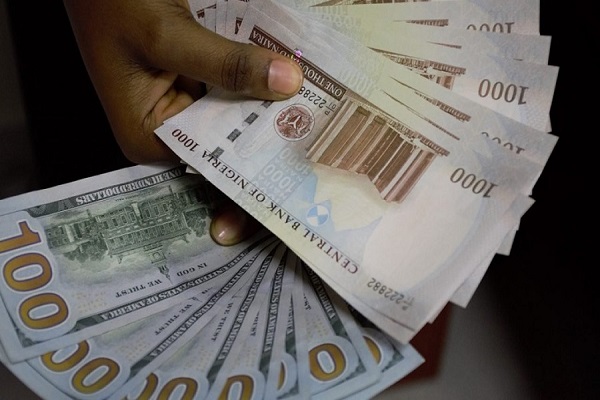
The Nigerian currency continued its upward movement against the U.S. Dollar on Friday morning, sustaining the gains recorded earlier in the week as trading activity approached its final session. Both the official and informal segments of the foreign exchange market reflected improved stability, supported by steady dollar inflows and ongoing regulatory measures.
At the Nigerian Foreign Exchange Market (NFEM), the Naira recorded a modest gain during early trading hours. Mid-morning figures indicated that the currency exchanged at an average of ₦1,378.26 to the Dollar, improving slightly from Thursday’s closing rate of ₦1,382.45. This development reinforces a strengthening pattern that has been evident since the beginning of the second quarter.
Market participants attribute the relative calm in the official window to recent enhancements introduced by the Central Bank of Nigeria (CBN), particularly the upgraded Electronic Foreign Exchange Matching System. The platform has improved transparency in transactions and enabled more efficient price determination, reducing volatility often seen at the start of new trading cycles. Dealers also noted that foreign exchange supply from independent sources, alongside inflows from foreign portfolio investors, has remained sufficient to meet existing demand.
A similar trend was observed in the parallel market, where the Naira traded within the ₦1,400 to ₦1,410 range across major cities such as Lagos, Abuja, and Kano. The narrowing gap between official and street rates—currently estimated at between ₦22 and ₦32—signals progress in efforts to align both markets. Analysts say this convergence could discourage speculative trading practices and encourage broader use of formal banking channels.
Several underlying factors have continued to support the Naira’s resilience. Nigeria’s external reserves remain strong at about $49.5 billion, providing the monetary authorities with the capacity to manage market pressures. Additionally, firm global crude oil prices—particularly Bonny Light, which is trading above $100 per barrel—have sustained foreign currency inflows into the economy.
The Central Bank’s tight monetary stance has also played a role, with elevated interest rates helping to attract foreign investment into Naira-denominated assets, thereby strengthening demand for the local currency.
Looking ahead, financial experts anticipate that the Naira will likely close the week within the ₦1,375 to ₦1,390 range at the official window. While global economic developments and domestic demand trends remain key variables, current indicators point to a more stable and predictable exchange rate environment. Attention is now turning to upcoming inflation figures and future policy decisions by the apex bank, which are expected to shape the currency’s direction in the coming weeks. GWG.