By Ike Abonyi
“When you give ‘shishi’ to buy votes, you are not giving a gift—you are paying an advance fee to rob the treasury”-Peter Obi.
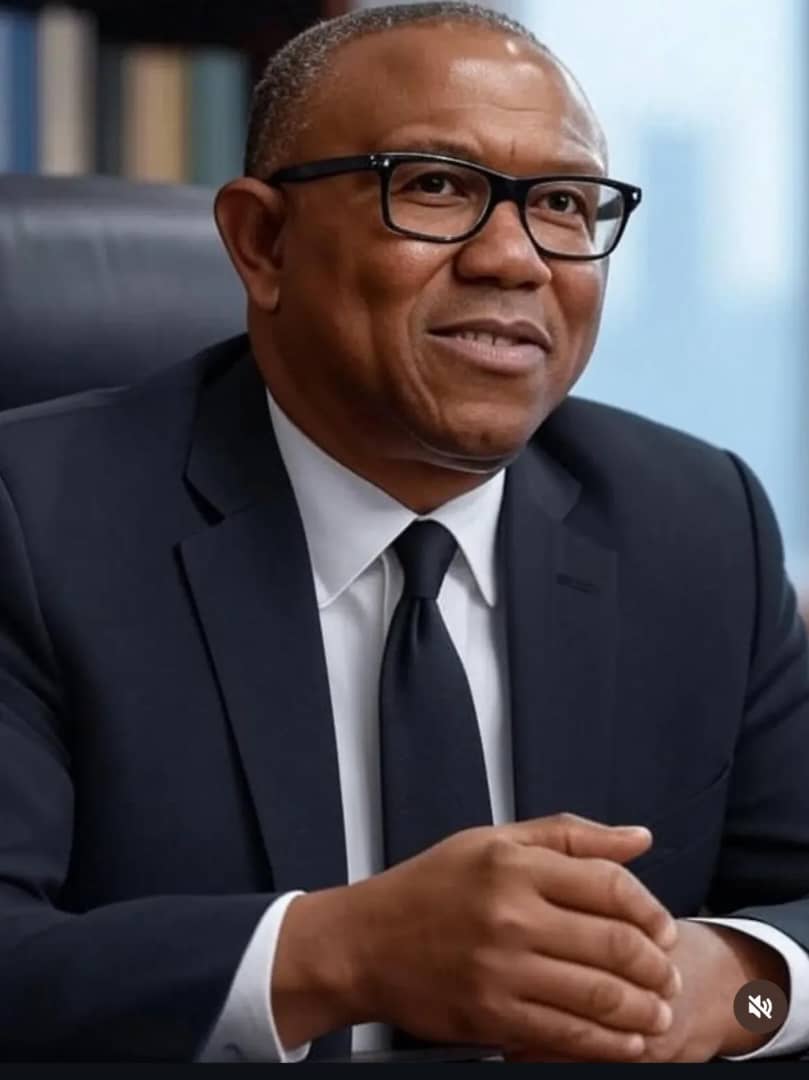
The profound influence of Peter Obi on Nigeria’s political landscape is undeniable, prompting questions about his central role. This observation stems from a social media activist’s inquiry into how Obi became the focal point of national political discourse when he gave ‘no shishi’. The activist’s frustration is understandable, given that Obi is a constant topic of conversation across all sectors of Nigerian society – government and opposition, private and public, and across all regions and demographics, both domestically and internationally. It is clear that, for compelling reasons, no other politician currently commands such a central position in the nation’s political sphere.
One can only speculate on how diminished Nigeria’s political discourse and social media would be without Peter Obi’s presence. He is the singular political figure at the heart of every discussion, resonating in cities, villages, places of worship, social gatherings, and community forums.
The entire political arena, encompassing the ruling party and various opposition groups, adjusts its strategies, forms alliances, and shifts its trajectory in response to Obi’s influence.
Peter Obi’s ascent as a pivotal figure in contemporary Nigerian politics is attributable to his capacity to redefine national conversations. By reframing the nation’s challenges not as ethnic or regional conflicts but as a fundamental dichotomy between effective governance and excessive spending, he has firmly established his ideology at the core of the political discourse.
Nigeria now has a politician who commands attention without ostentatious displays or significant financial expenditure, yet remains the subject of widespread discussion. He champions modesty as a way of life, and this resonates deeply with the populace, who are increasingly drawn to him over those who resort to distributing material inducements. The underlying reason for this phenomenon is straightforward: the populace has experienced the fleeting allure of transactional politics and recognised its enduring negative consequences.
Despite possessing extensive governmental structures – including the federal government, 36 state governors, 774 local government areas, a significant majority in the National Assembly, and control over key institutions like INEC, the police, judiciary, and military, as well as influence over informal sectors like transport unions and market women – President Bola Tinubu and the ruling All Progressives Congress (APC) are demonstrably anxious and preoccupied with Peter Obi.
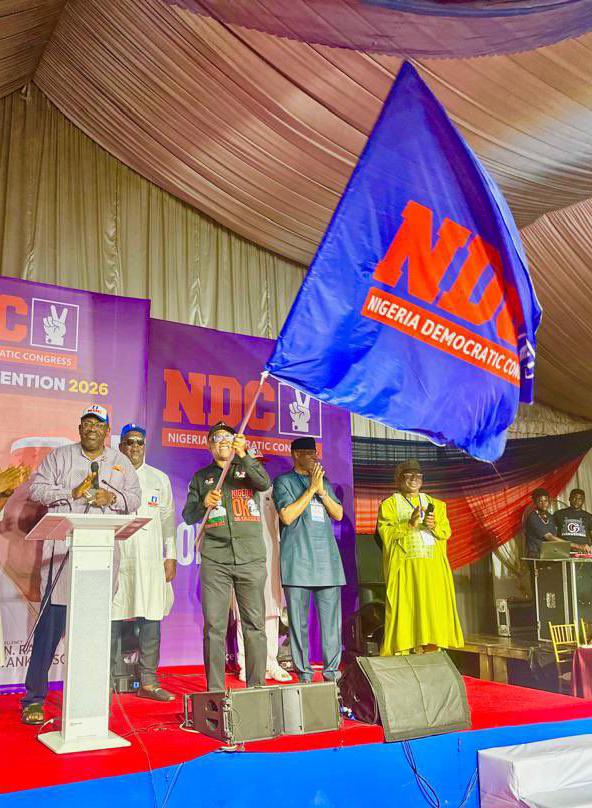
Even with their command over these established structures, a palpable sense of unease pervades the seat of government and state houses nationwide, as the political gravity undeniably centres on Peter Obi. Although he is associated with a relatively new political party, the Nigeria Democratic Congress (NDC), mandated by regulations, his support base transcends party affiliation, religious denomination, or ethnic origin.
Peter Obi has become the critical nexus where a majority of voters, influential figures, and policymakers converge, establishing him as the political centre of gravity. This position signifies the political mainstream, a central movement around which other politicians must orient their strategies to forge successful coalitions.
Historically, media narratives driven by political movements and grassroots activism have steered the political centre towards either the left or the right. However, understanding the current centre of gravity is paramount for effective governance, as policies deviating significantly from this recognised centre are likely to encounter public opposition.
Since his prominent entry into national politics in 2022, Peter Obi has, perhaps unintentionally, become the political centre of gravity. This position has been further solidified by his remarkable electoral performance in 2023 and the sustained momentum he has maintained, positioning him as the undisputed leading candidate for the next presidential election, even with six months remaining.
The assertion that Peter Obi occupies the absolute centre of contemporary Nigerian politics is not an exaggeration but a structural reality of the post-2023 democratic landscape. Whether through direct action, reaction to events, or systemic pressures, the nation’s political forces consistently gravitate towards him.
To comprehend how a third-party candidate maintains such a central position, one must analyse his role not merely as an individual politician but as a systemic disruptor, a profound challenge to the established order, and the primary catalyst for defensive strategic adjustments among the traditional political elite.
For over two decades, the Peoples Democratic Party (PDP) and the All Progressives Congress (APC), along with their precursor alliances, operated under an implicit, transactional agreement. Power was rotated among regional elites, and electoral contests were largely internal power struggles within the same class.
Obi’s departure from the PDP in 2022 and his subsequent alignment with the Labour Party (LP) disrupted this established duopoly. By effectively channelling popular discontent, he transformed what might have been a peripheral third-party candidacy into a potent populist movement. Today, every strategic decision by the ruling APC and the main opposition is evaluated against the ‘Obi factor.’ He has compelled traditional parties to confront an inconvenient truth: the old methods of securing delegates and relying solely on bloc voting along ethnic and regional lines are no longer infallible.
Nothing underscores Obi’s centrality more than the behavioural shifts of his political adversaries. In anticipation of upcoming electoral cycles, we witness unprecedented levels of anxiety and fluid political realignments. Traditional rivals within the APC and PDP frequently find common ground in their public pronouncements against Obi and his supporters, known as ‘Obidients.’
The political establishment perceives him as an existential threat to the patronage systems that underpin Nigerian governance. Consequently, judicial appointments, electoral reforms, and legislative debates are often influenced by an underlying objective: how to safeguard the current framework against further systemic shocks like the one experienced in 2023.
Since 2022, Peter Obi has, inadvertently, been setting the ideological and rhetorical agenda for the nation’s political discourse.
Before 2022, Nigerian political campaigns were seldom characterised by in-depth policy discussions; they were primarily exercises in public relations, financial power, and the negotiation of zoning arrangements. Obi fundamentally altered the nature of national political dialogue.
His characteristic slogans and key policy areas, such as the transition from consumption to production, the call to ‘Go and Verify,’ and the emphasis on the ‘Cost of Governance,’ have become benchmarks against which the current administration’s performance is assessed. The slogan ‘From Consumption to Production’ has compelled the government to justify its substantial infrastructure loans and fiscal policies. When significant funds are allocated to debt relief or non-essential administrative expenditures, Obi’s public tracking of macroeconomic indicators provides a readily available counter-narrative. Furthermore, the simple directive ‘Go and Verify’ has elevated data, transparency, and comparative governance – such as contrasting Nigeria’s declining GDP with the growth of peer economies like Indonesia – into central themes of mainstream civic engagement. Similarly, the focus on the ‘cost of governance,’ by consistently exposing the extravagant spending of the executive and legislative branches, positions him as the champion of institutional integrity, transforming every state budget into a forum for public accountability.
In a multi-ethnic Nigeria where power-sharing has long been a cornerstone of national security architecture, Obi’s prominence brings structural anxieties to the surface.
Supporters perceive him as a nationalist offering solutions through expertise, while critics often interpret his candidacy through a narrow regional lens, exploiting ethnic divisions to disrupt potential cross-regional cooperation. The concurrent intensity of these opposing viewpoints underscores his significance as the focal point of Nigeria’s current identity politics discourse.
Crucially, the established political order views Peter Obi as a fundamental threat to the entrenched patronage systems that underpin Nigerian governance. Consequently, efforts within judicial appointments, electoral reforms, and legislative proceedings are often subtly geared towards containment – safeguarding the existing structure from another disruptive shock like the one experienced in 2023.
However, given the long history of divisive politics in Nigeria, Peter Obi’s central position does not automatically ensure his ascension to executive power. It does, unequivocally, compel the establishment to acknowledge his presence. Any reforms undertaken by the traditional political elite are motivated by a desire to thwart his advancement. Similarly, any consolidation of their control over democratic institutions serves to shield them from his movement. Yet, in 2027, the plight of over 140 million citizens languishing in abject poverty, despite Nigeria’s abundant resources, a situation exacerbated by the elite’s avarice, cannot be disregarded. Every phenomenon has its conclusion, and 2027 appears poised to mark the end of this political misstep. Indeed, nations lacking democratic structures still manage to provide well-being for their citizens through effective governance. Should the populace’s chosen leader not prevail at this juncture the very foundation of a government deriving its authority from the people’s votes would be jeopardised. May divine intervention guide the project.