
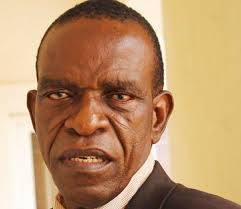
Peter Obi: The people’s organic coalition
By Ike Abonyi
“Coming together is a beginning, staying together is progress, and working together is success” – Henry Ford
The opening quote to this conversation by America’s foremost Industrialist and business magnate, Heny Ford aptly frames the craving in the current Nigerian political landscape. When President Bola Ahmed Tinubu and the All Progressives Congress (APC) seemed to undermine democratic principles, necessitating the political urge for his removal to safeguard the nation’s democracy, various strategies for achieving this have been emerging. It became clear that ousting a figure like Tinubu would require a united front, not merely vocal opposition. Consequently, the consensus was that only a broad coalition could achieve this goal. This understanding fueled the African Democratic Congress’s (ADC) efforts to unite opposition forces, with the experienced and still-active former Vice President Atiku Abubakar positioned as the central figure due to his age and experience.
Political leaders generally agreed on forming this umbrella organisation and began working towards it, with Abubakar expected to lead the coordination efforts due to his extensive background even though significantly he was not favoured by zoning, but was expected to provide the father figure for the embattled opposition team. Atiku’s refusal to play the fatherly role, opened the way for the disintegration of the opposition.
But beyond alliance therefore, fundamentally, what this conversation aims to achieve is to focus on the narrative of how Peter Obi stood firm where structural coalition failed.
Anyone familiar with African politics, especially Nigeria, where a formidable politician like Tinubu holds power, would anticipate significant challenges for the opposition. While this coalition was being formed, Tinubu actively worked to prevent any cohesive opposition from materialising. He achieved this by assembling his own coalition, leveraging the power of the incumbent, all office holders—national legislators and governors. He successfully brought governors, senators, and representatives, who hold sway over their constituents, into his camp through highly attractive, and almost irresistible offers. Indeed, no governor could resist the allure, not even Alex Otti, who won office on the populist wave of Peter Obi’s Labour Party and was poised for re-election.
Despite these advantages, nothing was left to chance. All viable opposition parties—the People’s Democratic Party (PDP), the Labour Party, and the New Nigeria Peoples Party (NNPP)—faced intense pressure that jeopardised their continued existence. Influential figures like Nysom Wike readily assisted in dismantling the PDP, mirroring Julius Abure’s actions within the Labour Party.
Even after opposition members from various parties attempted to consolidate within the ADC, further pressures led to the ADC now having three presidential candidates leading up to the January 16, 2027, election.
However, as both the ruling party and the opposition vied for dominance, the opposition faced internal disarray. Following a meeting in Ibadan where the opposition pledged to present a single candidate against the ruling party, their unity fractured. The PDP, which was intended to lead the coalition as the strongest and the former ruling party at the centre, now has two candidates, and the ADC, the supposed umbrella coalition, has three candidates, all seemingly aligned with the APC and Tinubu’s agenda.
Amidst this fractured landscape, one individual has emerged as the true opposition force that Tinubu and the APC should confront. Peter Obi, now representing the Nigeria Democratic Congress (NDC), has consistently been the focal point for opposition consolidation. His enduring appeal stems from distinct strategic advantages, evolving voter demographics, and his unique communication style. Unlike traditional Nigerian politics that rely on patronage networks, Obi commands a highly motivated, organic, and largely self-funded voter base through his distinctive messaging.
The youth-driven ‘Obidient’ movement remains vibrant and resistant to conventional political manipulation. By aligning with Rabiu Kwankwaso and his influential Kwankwasiyya movement, Obi and his supporters have established alternative power bases and political platforms. Obi now serves as a direct link to an engaged, urban, and tech-savvy electorate that traditional party structures struggle to reach.
Obi’s national appeal was evident in the 2023 presidential election. The results of that cycle fundamentally altered how coalition strategists perceive electoral dynamics. Obi demonstrated that a third-party candidate could disrupt the established regional duopoly. By securing victories in crucial areas like Lagos State and parts of the North-Central region, in addition to his strongholds in the South-East and South-South, Obi showcased a broad geographic reach.
Any serious coalition strategist would recognise that a credible challenge to an incumbent administration, particularly one as robust as Tinubu’s, requires a candidate who has already proven their ability to garner millions of votes across different regions, making Obi the most logistically viable leader for an alliance.
Obi’s clear ideological divergence, resonating with the current national sentiment, has been a significant advantage. At a time of widespread public discontent due to severe economic challenges, Obi’s core political identity stands in stark contrast to the status quo.
The strategic positioning of Peter Obi within Nigeria’s opposition framework has become a critical factor in the lead-up to the next political cycle. The efforts to unify the opposition have shifted from structural alliances to a fragmented scenario, highlighting both the potential and the inherent difficulties in integrating a prominent political figure into a single front.
The attempts to forge a unified opposition platform against the ruling APC have involved various phases of strategic manoeuvring, formal agreements, and abrupt realignments. Obi officially moved towards a broader alliance by actively engaging with the ADC coalition. This platform was intended to merge the organic energy of the ‘Obidient’ movement with established political networks to create a formidable alternative. But Tinubu’s devious agenda and Atiku’s disproportionate ambition combined to frustrate it.
To address leadership concerns and foster trust among key opposition figures like Atiku Abubakar, Obi’s camp proposed a single four-year term limit, positioning him as a unifying transitional leader. However, despite this significant concession, persistent internal conflicts, legal disputes over leadership structures, and growing distrust within the ADC framework led to Obi’s withdrawal. He cited concerns about arrangements that appeared more like ‘power grabs’ than genuine ideological alignments.
Following the coalition’s inability to establish a forward-looking framework, Obi and Rabiu Kwankwaso made a significant strategic move away from the fragile union. Having secured the presidential nomination for the newly prominent Nigeria Democratic Congress (NDC), this effectively signals a multi-faceted opposition strategy rather than a unified front, thereby reshaping the dynamics of anti-government voting blocs. Through this substantial structural shift, Obi has consistently aimed to steer the conversation away from conventional political bargaining, famously declaring his sole commitment to a ‘coalition against hunger and poverty.’
This path is undoubtedly arduous in an environment where political patronage is often driven by factors beyond selfless public service. But that notwithstanding, the recent obvious disintegration of the ADC after Peter Obi’s departure has undeniably revealed him as the primary opposition figure. Even the perceived gaps in Obi’s grassroots support are being effectively addressed by his securing Rabiu Kwankwaso’s political partnership. Indisputably, Rabiu Kwankwa is a political force with an established and influential presence in the North.
It’s crucial to acknowledge that political partnerships are inherently fluid and often susceptible to commitment issues, where uncertainty can derail negotiations. Unlike business ventures, political alliances are less bound by formal legal frameworks, meaning their success hinges significantly on the mutual trust and goodwill among participants which Obi and Kwankwaso as strategic politicians very well understand.
The rationale behind forming coalitions stems from the recognition that individual influence is insufficient to overcome formidable challenges. As Robert A. Dahl observed, ‘every ally is sometimes an enemy and every enemy is sometimes an ally,’ highlighting the complex and shifting nature of political relationships.
The International Coalition Framework posits that for a coalition to endure, a leading entity must demonstrate ideological strength over its competitors by fostering and expanding a shared vision, which is precisely what Peter Obi achieved with his ‘Obidient Movement and his mantra of shifting Nigeria away from Consumption to production.
This dynamic is vividly reflected in the current political realignments across Nigeria in anticipation of the general election. Peter Obi has emerged as a central unifying figure, and his alliance with Kwankwaso has positioned their bloc as a significant contender and topic of discussion for the 2027 elections, regardless of one’s perspective on the unfolding political landscape. Echoing the wisdom of Chinese General Sun Tzu, ‘If you know the enemy and know yourself, you need not fear the results of the battle ahead.’ Both Tinubu and Obi are very much abreast of their potentials as they take their case to the court of Nigerian voters. May providence guide and determine the outcome of the struggle.
Sunrisereporters.